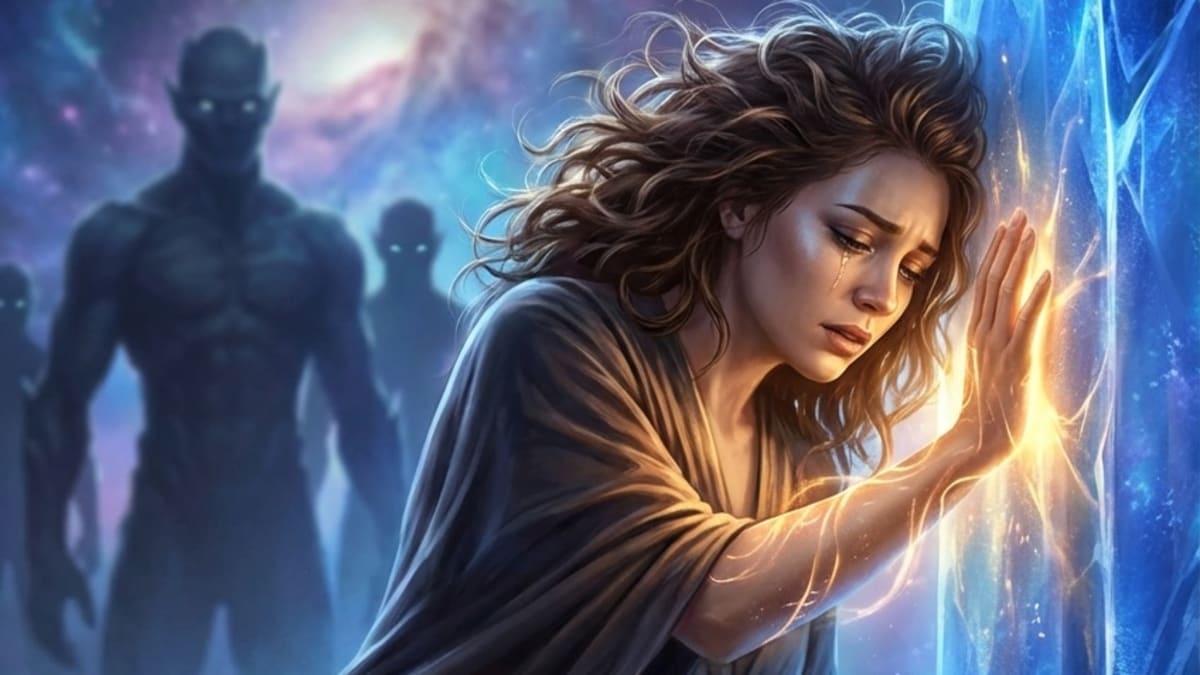
The rejected mate trope is a shifter romance staple: a werewolf or other animal shifter discovers their fated partner, only to be publicly and brutally refused. The rejection usually happens in front of the whole pack, and the reason is almost always something humiliating. The protagonist is too weak, too human, the wrong body, the wrong class, or simply not the woman or man the mate already wants.
What follows is the real engine of the trope: heartbreak, survival, sometimes revenge, and eventually a love that actually deserves the character. It is one of the most durable formulas in paranormal romance, and it runs on a very specific kind of catharsis.
If you have landed here, you probably just finished a book that gutted you in chapter three and want to understand why the formula works so well. Or you are writing one and want to get the beats right. Either way, this guide covers the whole thing: what the rejected mate trope actually means, where it came from, how authors build it on the page, and where the flat versions go wrong.
What Rejected Mate Trope Actually Means
A fated mating bond, in the shifter romance universe, is a supernatural destiny. Two people are made for each other, and their wolves, bears, or other animals recognize it instantly, usually through scent. Rejection is the deliberate severing or refusal of that bond by one half of the pair, and it hurts both parties, though the story always wallows in the rejected one's pain first.
The name describes the inciting incident, not the whole book. A novel built on this trope spends its first act on the rejection and its remainder on the recovery: physical, emotional, and often pack-political. The rejection is the wound the plot has to heal.
What counts as a rejected mate story
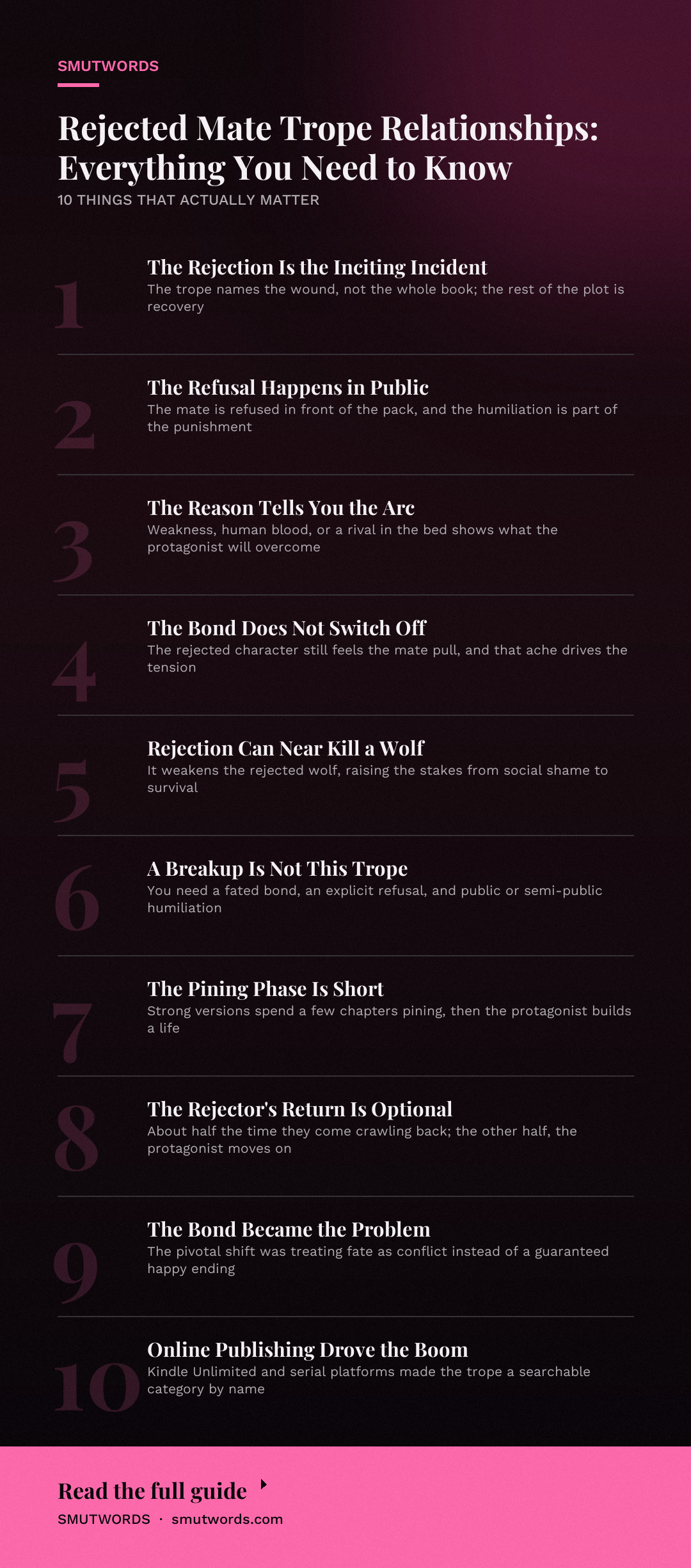
- Public rejection. The refusal happens in front of witnesses, usually the pack, and the humiliation is part of the punishment.
- A stated reason. Weakness, human blood, being an omega, a rival already in the mate's bed, a political alliance the mate wants instead. The reason matters, because it tells the reader exactly what the protagonist will later overcome or leave behind.
- A bond that persists. The rejected character still feels the mate pull. That ache is the trope's tension source, and it does not switch off just because the mate was cruel.
- Consequences. Rejection weakens the rejected wolf, sometimes to the point of near-death, which raises the stakes from social shame to survival.
What doesn't count
A simple breakup between two shifters is not this trope. A one-night stand that goes wrong is not this trope. There has to be a fated or pack-sanctioned bond, an explicit refusal, and a public or semi-public humiliation for the story to belong in the rejected mate category.
The pack mates romance framework matters here, because the pack is the audience for the rejection and the judge of the protagonist afterward. Strip the pack out and you get a sad breakup. Keep the pack in and you get a social death sentence.
Common misconceptions
Readers new to the subgenre sometimes assume the protagonist pines for the rejector for the whole book. In most strong versions, the opposite happens. The pining phase lasts a few chapters at most, and the rest of the book is about the protagonist building a life that does not need the mate who threw them away.
Enjoyed this? Get a free book.
Join the list and we will send a complete free story straight to your inbox, plus new releases every week after that. No credit card, no catch.
Another misconception: that the rejector always comes crawling back for a redemption arc. Roughly half the time, they do, and the protagonist gets to refuse. The other half, the rejector fades into the background and the protagonist finds someone else, often the fated mate's more powerful rival or an entirely new love interest.
Where Rejected Mate Trope Comes From
This trope is a publishing phenomenon more than a folktale one. Its history is best told through the genre's growth, not ancient wolf mythology.
The fated-mates setup is old romance machinery: the idea that two people are cosmically assigned to each other. The rejection angle is younger. Paranormal romance in the nineties and early 2000s dabbled in mate bonds, but the pairing was almost always a foregone happy ending. The refusal as the story's engine showed up as shifter romance matured into its own paperback category in the 2010s.
The key shift: from fated to refused
The pivotal move was treating the bond as a problem instead of a solution. If the wolf says "mine" and the human says "no," you suddenly have conflict baked into the premise. Authors noticed that the most emotionally intense scenes in fated-mate books were never the claiming scenes. They were the near-misses and refusals.
Once that became clear, entire series were built backward from a rejection scene. The trope also plugged directly into the rise of alpha/beta/omega dynamics, which gave the rejection an extra social dimension. An omega rejected by an alpha is not just heartbroken; they are politically erased.
Digital publishing and the volume boom
The real volume came from online-first publishing. Kindle Unlimited, serial platforms, and self-published paperback lines turned shifter romance into one of the most voraciously consumed categories on the internet. The rejected mate trope became a shorthand readers could search for by name, and the t


Loading comments…