What a Mate Bond Actually Is (and Isn't)
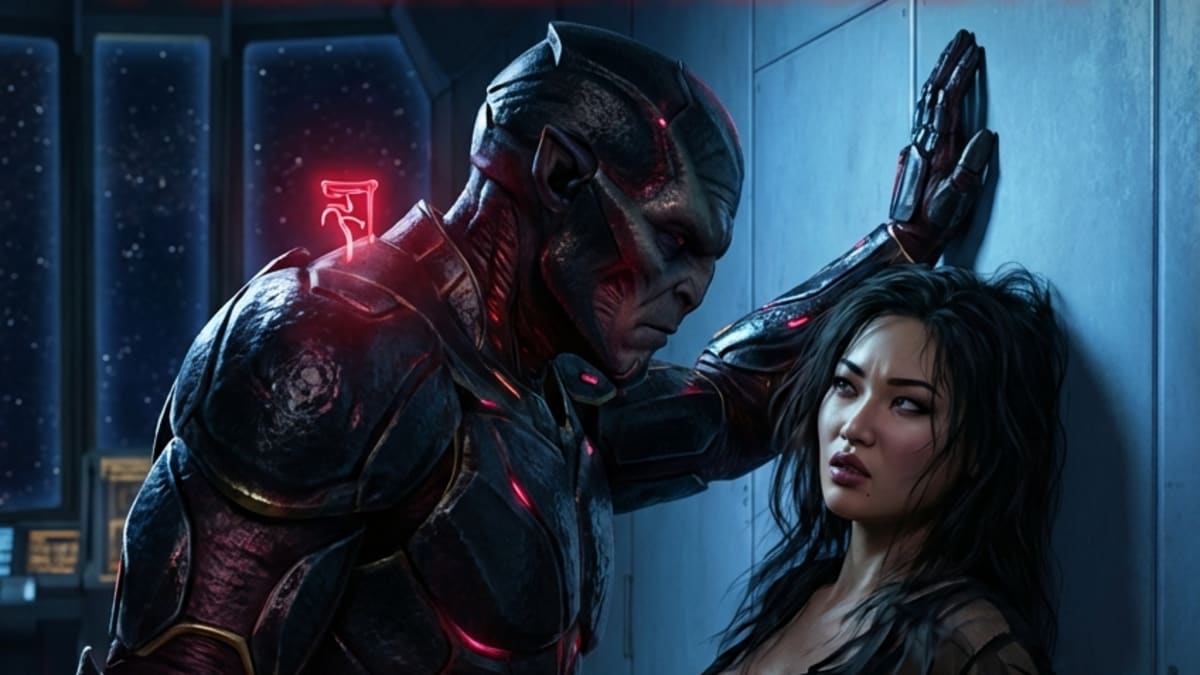
An alien mate bond romance runs on a completely different promise than any human wedding vow. When a human couple stands at an altar, they're making a legal and spiritual commitment that either party can walk away from, with paperwork and a lawyer if it comes to that. When an alien in one of these books locks eyes with their intended and feels the bond snap into place, there's no walking away. The biology does the deciding, and the characters just have to live with what their bodies have chosen.
That distinction matters more than most readers give it credit for. A human marriage is a promise you make with your conscious mind. A mate bond is a verdict your nervous system delivers without asking permission. The difference reshapes everything: how the romance plays out, how conflict gets resolved, what's actually at stake when the couple hits their first major fight.
Here's the thing about reading these books back to back. Once you've seen fifty human weddings and fifty mate bond ceremonies, you start noticing where the fantasy really lives. It's in the permanence, not the ceremony.
The Instinct Problem: You Can't Divorce Your Own Biology
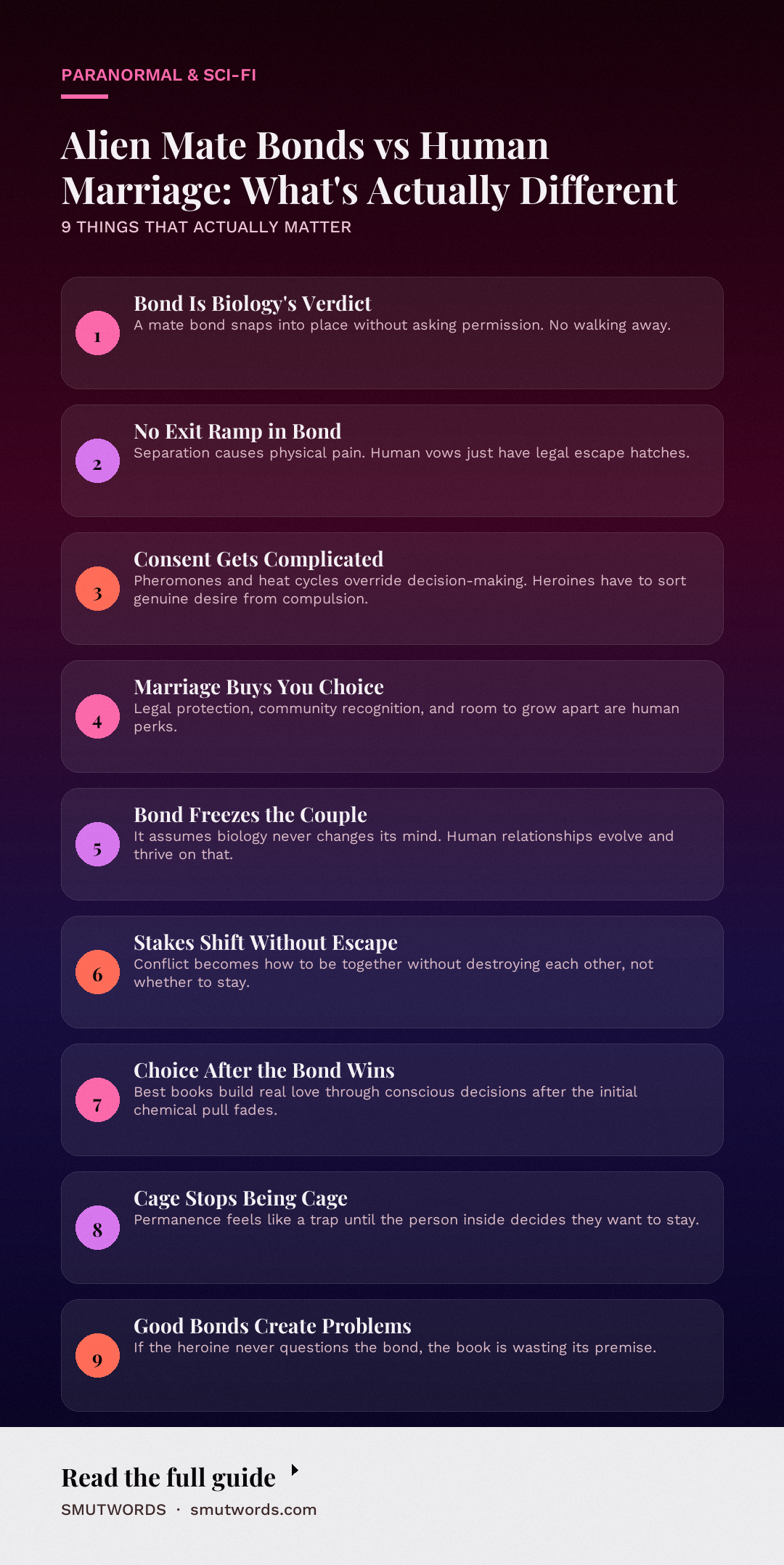
Human vows say "until death do us part," but everyone in the room knows that's a stretch goal, not a binding contract. People fall out of love, change, make mistakes that can't be taken back. The vow is an aspiration, and both parties enter it knowing divorce is a real exit ramp.
A mate bond doesn't have an exit ramp. The alien character in Taken by the Celestial King isn't choosing to stay because he made a promise he intends to keep. His biochemistry has rewired itself so that separation causes actual physical pain. That's a different stakes level entirely.
When a human spouse says "I'll never leave you," part of the weight comes from knowing they could and choosing not to. When an alien says it, the weight comes from knowing they literally cannot. The question becomes whether that's romantic or terrifying.
The best alien mate bond romance stories lean into that ambiguity. The heroine in many of these books didn't ask for this. Her body responded to his in a way she can't control, and now she's facing a lifetime commitment her rational mind never consented to. That tension is the engine of the whole subgenre.
Consent Looks Different When Instinct Does the Talking
This is where the comparison gets uncomfortable, and the good books don't flinch from it. A human wedding requires two conscious, sober, willing adults to say "I do" in front of witnesses. A mate bond in most alien mate bond romance novels happens when pheromones, heat cycles, or some kind of psychic resonance overrides the characters' usual decision-making. The heroine might be furious about the situation while her body arcs toward him anyway.
Smart authors handle this by making the bond's onset a crisis the characters have to work through, not a problem that conveniently disappears. In The Breeding Spiral: Captured in the Tentacle Alien Incubation Chamber, the captor-captive dynamic means consent is the entire question. The heroine has to figure out where her own genuine desire ends and where the biological compulsion begins.
A human marriage plot never has to ask that question, because human biology doesn't produce that kind of compulsion.
What a Wedding Vow Buys You That a Bond Doesn't
Let's be fair to the human institution before we write it off entirely. A marriage vow includes things no mate bond in any alien romance novel has ever provided:
- Choice. The ability to wake up twenty years later, realize you made a mistake, and leave with your dignity intact.
- Legal protection. Property division, custody agreements, healthcare decisions, tax benefits. None of the alien husbands in these books are filing joint returns.
- Community recognition. Your neighbors understand what a wedding ring means. Nobody at the office is going to understand why your husband growls at strangers who stand too close.
- The option to grow apart. Sometimes people change in opposite directions, and marriage lets them acknowledge that gracefully. The mate bond assumes your biology will never change its mind, which is a bet most human bodies wouldn't take.
That last point is worth sitting with. The alien mate bond romance fantasy sells permanence as the ultimate romantic gesture, but real human relationships thrive partly because they have room to evolve. The bond freezes the couple at the moment of connection and assumes that's all they'll ever need from each other.
How the Stakes Ratchet Higher in Alien Romance Plots
Given how restrictive a mate bond sounds, why does the fantasy work so well? Because the stakes get higher when leaving isn't on the table. Human romance novels have to manufacture reasons the couple can't simply break up and move on. Alien romance novels with mate bonds skip that problem entirely and move straight to the interesting question: what happens when two people are stuck together and have to actually make it work?
The conflict shifts from "will they stay together?" to "will they figure out how to be together without destroying each other?" That's a richer vein to mine. A heroine who can't leave has to confront her own patterns, communicate honestly, and decide whether she's going to fight the bond or surrender to it.
The forced proximity of a mate bond creates the same pressure cooker effect you get in a forced proximity plot, except there's no escape hatch when the cabin fever sets in.
In Planet of Orgasms, the entire premise depends on the bond being total and inescapable. The heroine isn't weighing her options. She's figuring out how to survive her own pleasure response long enough to make a coherent decision about anything. A human wedding night can't deliver that level of sensory overwhelm, no matter how good the hotel suite is.
The Best of Both Worlds: Bonds That Leave Room for Choice
The most satisfying alien mate bond romance novels find a middle ground. The bond creates the initial pull, the chemical fireworks, the sense of being seen at a cellular level. But the real relationship gets built through conscious choice after the instinct settles down.
The alien hero has to win his mate's actual heart, not just her biological response. The heroine has to decide she wants him as a person, not just as the source of the best orgasms of her life.
Enjoyed this? Get a free book.
Join the list and we will send a complete free story straight to your inbox, plus new releases every week after that. No credit card, no catch.
That's the version of the fantasy that keeps readers coming back. The bond is the door that opens into the relationship, but walking through it and staying requires something more human. In Star Sower: A Captive in the Tentacle Alien Breeding Chamber, the heroine starts out as a captive in every sense.
By the end, she's making choices about what she wants. The difference between her initial coercion and her final consent is the entire emotional arc of the book.
That arc matters because it speaks to something real readers want. The fantasy of being wanted so completely that someone's biology rearranges itself around you is powerful. But the fantasy of being chosen, consciously and deliberately, by someone who could pick anyone is just as strong. The best alien romance authors give their couples both.
Why the Comparison to Human Marriage Is the Point
When you read an alien mate bond romance next to a contemporary romance about a human wedding, you're getting two different answers to the same question: what makes a relationship unbreakable? The human answer is commitment, renewed daily through choice and effort. The alien answer is biology, a hardwired connection that doesn't care what you choose.
Neither answer is automatically better. Human commitment is fragile and can fail, but it's also freely given. The mate bond is absolute and permanent, but it can feel like a cage if the characters don't learn to love what they're trapped with. The best books in the subgenre understand that the cage stops being a cage when the person inside decides they want to stay.
For readers who like their romance with a side of existential questions, that tension is the whole appeal. You get the hot alien, the impossible sex, the worldbuilding that makes human weddings look like a formality.
And underneath all of it, a serious meditation on what actually holds two people together. Is it a promise you make? Or is it something you can't help? The alien books just do it with tentacles and heat cycles.
Where the Fantasy Breaks Down (and Why That's Fine)
Nobody reads these books for biological accuracy. If mate bonds were real, they'd come with practical problems the novels conveniently skip. Jealousy would be constant. Independence would vanish.
The idea of being alone again would become physically impossible. The books that acknowledge this darkness, even briefly, are the ones that feel most honest.
The Worship the Womb series leans into the possessive, all-consuming side of the dynamic. The alien heroes in those stories don't want their mates to have separate lives. They want to worship, protect, and claim every single part of their bonded partner.
It's not a dynamic that would work in a human marriage, and the books don't pretend it would. They present the fantasy straight and let the reader decide whether it's hot or horrifying or some complicated mixture of both.
Signs You're Reading a Good Mate Bond Book Instead of a Gimmicky One
Not every book that slaps the word "fated" on the cover understands what makes the concept work. Here's how to tell the difference between a mate bond that lands and one that's just a plot convenience:
- The bond creates problems instead of solving them. If the heroine accepts the bond in chapter two and never questions it again, the book is wasting its premise.
- The alien has his own hang-ups about the bond. Maybe he didn't want a mate. Maybe he's terrified of losing her. Maybe he resents the lack of choice on his own side.
- The sex is tied to the bond's emotional stakes. If the physical scenes are interchangeable with any other romance novel, the author missed the point of the biological connection.
- The characters actively choose each other after the bond kicks in. That conscious choice separates a meaningful romance from a biological reflex.
- The ending doesn't fake out the permanence. No last-minute escape, no loophole that breaks the bond. The good books commit to the premise.
Human Vows Are a Promise. A Bond Is a Verdict.
A human wedding says, "I know myself, and I'm choosing you." A mate bond says, "My body has chosen you, and I'll spend the rest of my life figuring out what that means." The first is noble. The second is terrifying. And in the right hands, terrifying makes better fiction, because the characters have to work so much harder to find their way to love.
If you're new to the subgenre and want to see the dynamic done well, Officer's Orders: Breed Her is a strong entry point. The commander-heroine dynamic puts the bond's permanence in direct conflict with the heroine's sense of autonomy. Watching her reconcile the two is exactly the kind of push-pull the best alien romance delivers.
For more of what makes monster and alien love interests tick, the orc romance explainer covers similar ground from a different angle. The minotaur romance piece digs into what happens when the love interest is built for physical dominance but needs emotional vulnerability to make the pairing work. The patterns are all connected. Once you start seeing them, you can't unsee them.
Final Thoughts
Alien mate bonds will never replace human marriage in the real world, and that's precisely why they make such good fiction. The fantasy gives you everything a human relationship can't: total certainty, absolute commitment, a partner whose desire for you is written into his genetic code. The cost of that fantasy is autonomy.
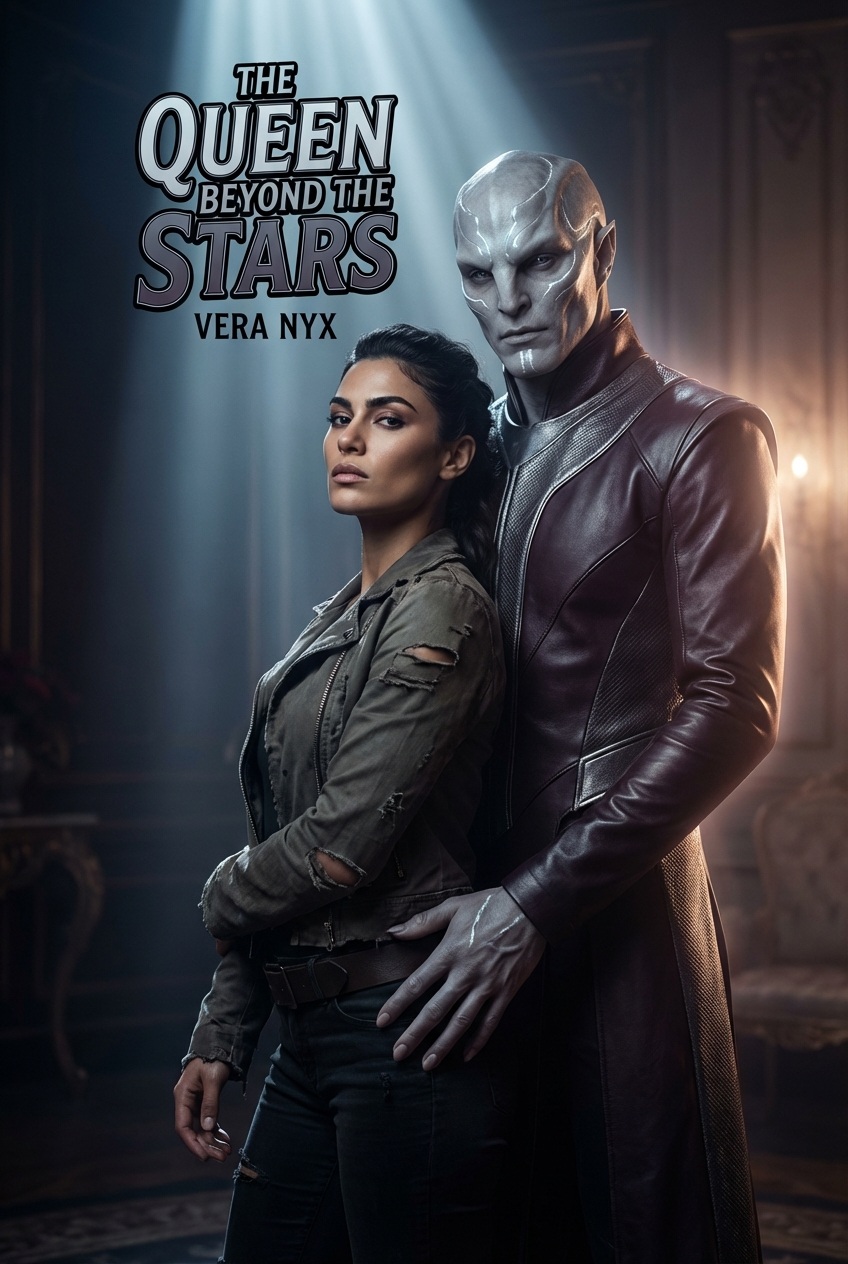
The best books in the genre make you feel that cost before they let the heroine find a way to make peace with it. Start with Taken by the Celestial King if you want a version where the bond is regal, overwhelming, and surprisingly tender. Then work your way outward from there.




Loading comments…