
What Makes a Cuckold Story Tick?
Ask ten regular readers of cuckold voyeur fiction what they actually want and you'll get roughly two answers, both of them right. Half want to be a fly on the wall of the bedroom, watching every detail of the wife's encounter with her lover unfold in real time.
The other half never wants to leave the husband's head. They want to experience the whole thing through the ache of his imagination while he waits downstairs, listens through the wall, or sits in the car outside the hotel.
Both camps are fully cuckold. Neither version is "softer" or "less committed" than the other, and the books that pretend otherwise usually fumble the fantasy for at least one whole group of readers. So let's talk about the two distinct flavors of cuckold voyeur fiction, what each one actually does for the people who love it, and how to tell which one a given story is really written for before you sink thirty minutes into it.
The Live-View Story: Watching It Happen, Up Close
The first type puts the husband physically present. Maybe he's in the armchair in the corner. Maybe he's kneeling at the foot of the bed. Maybe the wife ordered him to sit on the sofa by the window while she takes the bull on the rug in front of him, and he's not allowed to move, speak, or close his eyes until she says so.
These stories lean into the spectator dynamic hard. The power isn't just in what happens between the wife and her lover; it's in the enforced proximity between the husband and the scene he cannot touch. The erotic charge comes from his presence being acknowledged but ignored, his needs secondary to hers, his watching itself a service act.
Readers who prefer this version tend to want the specifics. They want to know exactly where the husband is sitting, what angle he's seeing, what the wife's face looks like when she comes while staring straight at him. The best live-view scenes weaponize eye contact.
A wife who looks at her husband across the room while another man fucks her from behind, holding his gaze so he can't miss her pleasure, is doing something far more intimate than the act itself. That moment lands hard in this subgenre, and it's almost impossible to replicate when the husband isn't in the room.
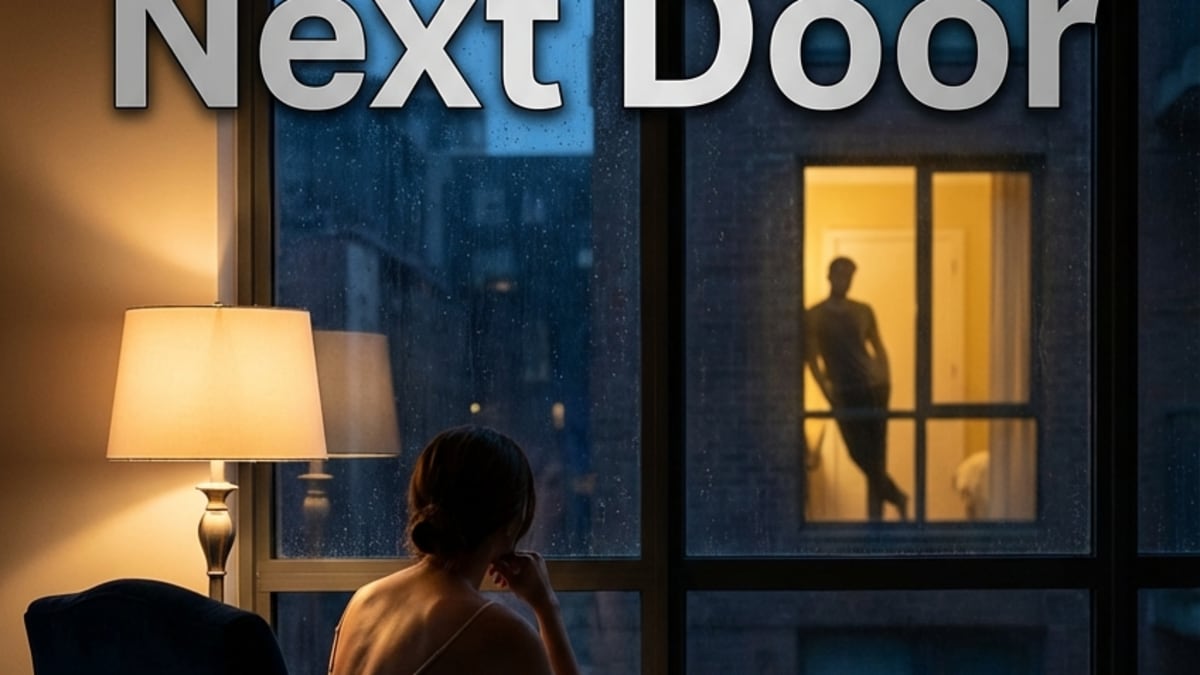
Books that do this well build the scene like a piece of theater. You get blocking and positioning, a real choreography of who stands where and what the husband's hands are doing (usually gripping the armrests, usually white-knuckled). The Married Couple Next Door is built almost entirely on this principle: the husband watches, deliberately placed where he has no choice but to see everything, and the story wrings every drop of tension from that fixed position.
The Imagined Version: The Husband Who Doesn't See
The second type runs on absence. The husband isn't there. He's in the living room while the bedroom door is shut, or he's at work while she's at home with someone he knows, or he's dropped her off at the lover's apartment and he's in the parking garage with the engine off and no idea what's happening four floors up.
These stories trade visual detail for a much tighter internal focus. Since the husband can't see anything, the story lives entirely in what he imagines, fears, waits for, and remembers. The torment fantasy is almost entirely self-generated, which is why it's sometimes described as the more psychologically intimate version. Watching is a physical experience; imagining is a mental one.
A good non-watching story plays with the gap between what the husband believes is happening and what the reader knows or suspects. The wife might have given him minimal information, or the story might split perspective so the reader sees her with the bull while the husband's chapters are pure speculation back at home. That split creates a particular itch that live-view scenes can't scratch.
There's also the aftermath beat that lands differently when he wasn't there. When he does finally see her, maybe hours later, she's slightly rumpled, slightly satisfied, and unreachable about exactly what happened. The husband reads the evidence rather than witnessing the event. Her satisfied stretch across the sheets means something different than it would if he'd watched her earn that stretch.
Stories like Permission Slip and Bull for the Weekend are built on this deferred gratification. The husband sends her out, waits, and then has to piece together the night from what she chooses to share later. The power imbalance in those stories comes from how little he gets told, and how much he fills the gaps with his own feverish projection.
Why Both Types Work Equally Well
There's a persistent bit of gatekeeping in corners of the bookish internet that treats live-view as the "real" cuckold stuff and imagined as somehow diluted. That ranking misses the point. The fantasy isn't about how much actual sex the husband observes. It's about his position in the hierarchy, and whether he's sitting in the corner or sitting at home, his position is the same: subordinate to his wife's pleasure and entirely outside the encounter.
For one reader, the fantasy is visual. They want the shame of seeing and not being able to touch, the specific humiliation of being made to look. For another, the fantasy is psychological. They want the torment of uncertainty, the spiral of imagining her with someone else and not knowing if the reality is better or worse than what they've constructed.
Both are versions of the same relinquishment of control. The husband doesn't get to dictate the terms. He gets told where to stand, or he gets told to wait, and in both cases that instruction is what does the work.
The other shared element is the wife's agency. In strong examples of either type, she is the one running the show. Her choice to include him or exclude him is itself an exercise of power, and readers who respond to one type over the other are usually responding to a different flavor of that dynamic.
Want her to hold his gaze while she orgasms? That's a woman showing him exactly what she's chosen.
Want her to come home with a flushed face and refuse to narrate? That's the same authority expressed as omission. Different textures, identical message.
When the Two Types Blend in One Book
Plenty of authors refuse to pick a side, and hybrid structures can be spectacular when they're deliberate. A story might open with the husband in the room, watching the early part of the encounter, and then have the wife send him out partway through, leaving him pacing the hallway while the sounds continue without him. That transition shifts the dynamic mid-scene: he's gone from witness to outcast, and losing even his spectator status is its own kind of fall.
Other hybrids switch between live observation and remembered reconstruction. The husband watches the beginning, then the story follows him home where he replays the images he can't stop seeing while adding imagined variations that never happened. The blending of a real memory and invented detail gives that internal spiral a sharper edge.
You'll also find books where different chapters belong to different people. One chapter is the wife and bull in live action, another is the husband at home imagining the whole thing, and the reader holds both versions simultaneously.
Enjoyed this? Get a free book.
Join the list and we will send a complete free story straight to your inbox, plus new releases every week after that. No credit card, no catch.
That structure makes you do the work of comparing what he thinks is happening with what actually is, and the mismatch between his imagination and reality becomes its own commentary on the fantasy. She Made the First Move plays with that alternating structure to good effect, letting the reader track the wife's growing confidence while the husband reconstructs her evenings from the fragments she brings back.
What Each Type Demands From the Author
Writing live-view cuckold voyeur fiction is a spatial and sensory challenge. The author has to maintain the husband's position in the room every single beat. He can't suddenly have a better view than the one you gave him, and his physical discomfort, stiff knees, aching back, dry mouth, is a constant undercurrent to the scene.
Great live-view writing makes the reading itself feel like sitting too close to something you shouldn't see, and the best passages make the audience feel like they're intruding alongside the husband.
The imagined version is a stamina test of a different kind. Stuck in one character's head with no external action for long stretches, the author has to generate heat from waiting alone.
That takes real craft. The husband's thoughts have to circle without getting repetitive, each new loop adding a layer of dread or arousal rather than repeating the same worry with different adjectives. The writer has to make an empty room feel fuller than any occupied one.
In both cases, the quality bar is the same. You can't coast on the setup. The best books in this space, and there's a long list of them, earn their heat through patient construction of the power dynamic rather than just dropping a wife and a bull in a room and assuming the premise does the work.
If you're looking for more titles along these lines, the roundup of best hotwife & cuckold books covers plenty of both flavors and labels them clearly enough to tell which you're getting.
How to Tell Which Type You're Reading
Once you know the difference, you can spot it in the first few pages most of the time. The signals are early and reliable.
- Where the first sex scene happens. Direct witness: the husband is in the room before anything starts, or he's led in and positioned. Indirect: he's dropped off, left behind, or locked out before the encounter begins.
- Which body the narrative inhabits during the act. If the prose stays with the husband while the wife and bull are in frame, you're in a watch story. If it cuts away from him and shows the encounter only through his imagining later, you're in an absence story.
- What the wife tells him afterward. Detailed debriefs suit the live-view structure, since he saw it but she might still make him narrate it back. Vague answers or outright refusal to discuss suit the absent structure, because her silence is the whole point.
- The husband's active role. Positioned and watching means he's a participant in the scene. Waiting and wondering means his participation is delayed and filtered.
- What the ending emphasizes. Closure that comes from the husband processing what he saw is different from closure that comes from him processing what he didn't see.
None of these signals indicates quality on its own. The absence version can be shallow and lazy just as easily as a live-view scene can be a flat description of bodies with no tension. The type matters less than whether the author commits to the mechanics of their choice.
Why the "More Hardcore" Label Is Wrong
Calling live-view the hardcore version does the whole genre a disservice. If anything, the imagined version can push into sharper emotional territory because it lives entirely in the husband's vulnerability without visual distraction. His imagination will always outdo reality, and seeing him spiral on less information can be far more uncomfortable than watching him watch.
The imagined version is also the one that deals most directly with trust and its suspension. The husband sends his wife out on faith, with an agreement and a set of terms, and then has to sit with everything that could go wrong. How to set those terms is a question the genre returns to constantly, and the stories that handle the negotiation carefully are the ones that make the later emotional payoff land.
That mechanics matter to readers is covered in detail in the piece on hotwife rules romance, and it applies to both watch and no-watch setups equally.
The honest answer is that "more hardcore" is a marketing label, not a structural description. A story where the husband is forced to clean her up afterward can work in either format. A story where she takes his wedding ring off before she leaves for the bull works in either format. The intensity comes from the specific beats the author chooses, not from whether the husband has a chair or just an imagination.
Plenty of readers like both types and switch based on mood. Some mornings the fantasy is being made to watch; some nights it's being left to wonder. Treating them as equally valid keeps the whole shelf healthier and stops people from feeling like they're reading the "wrong" version of a kink they already enjoy.
Where the Lines Blur With Neighboring Tropes
Cuckold voyeur fiction sits right next to adjacent dynamics, and the watching versus not-watching split shows up in those neighbors too. Hotwife stories where the husband is cheerfully supportive and uninvolved are a different emotional register from cuckolding where the humiliation is the point, and the debate over how to label those distinctions is worth reading in the piece on hotwife vs cuckold.
There's also the question of how much the husband participates in his own debasement. The cuckold humiliation fiction range is wide, and where a given story sits on that spectrum often determines whether the husband is forced to watch or banished from the room.
Cruelty in this genre is as much about control of information as it is about physical positioning, which is why a wife who says "you don't get to watch this one" can be hitting the husband harder than any live-view scene ever did.
The third man matters across both types too, and the cuckold bull trope has its own set of expectations depending on the format. In live-view stories, the bull often performs for the husband, playing to his position in the audience. In absence stories, the bull is a mystery figure whose competence is entirely inferred from the wife's satisfaction when she returns.
Final Thoughts
Neither version of cuckold voyeur fiction is a compromise. Live-view stories offer the full sensory weight of proximity without permission to touch, while imagined stories trade that for the darker richness of a mind filling the gaps. Both are complete fantasies with their own internal logic, and the readers who favor one aren't settling for a lesser version of the other.
If you're new to the shelf and wondering which type suits you, start with the one that gets you in the door without friction, and don't be afraid to sample both. A story like Shared Without Shame is a solid entry point if you want to see whether the live-view format lands for you, because it commits fully to the husband's physical presence and turns that placement into the engine of the whole narrative.
If you'd rather approach through the husband's interior life first, find a story that leaves him out of the room and see how your pulse handles the wait.







Loading comments…