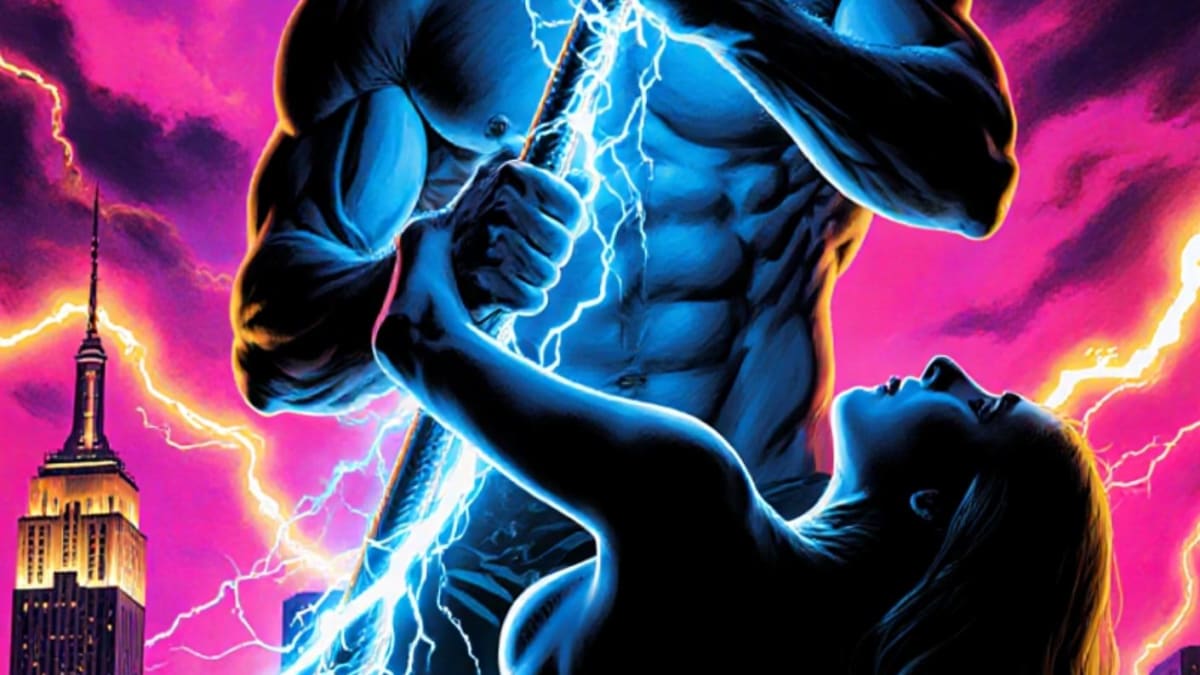
A rockstar romance is a love story built around a musician or a band, where fame, touring, and the specific chaos of creative life drive the relationship. The rockstar goes at the center, and the romance grows out of the backstage access, the late nights, the tour bus, and the gap between the public persona and the private person underneath it.
The love interest is usually a fan, a journalist, a fellow artist, a childhood friend, or an ex who resurfaces on a reunion tour. The appeal is the exposure: the reader gets close to someone the rest of the world only sees on a stage. It's one of the most reliable engines in contemporary romance, and it has been for decades.
What Rockstar Romance Actually Means
The name is almost self-explaining, which is why people underestimate how much craft sits inside it. The "rockstar" part describes a specific flavor of celebrity: loud, physical, often drug-adjacent, tied to live performance and a band rather than a solo brand. The "romance" part is the promise that this person, however untouchable on stage, ends up in a real relationship with the protagonist.
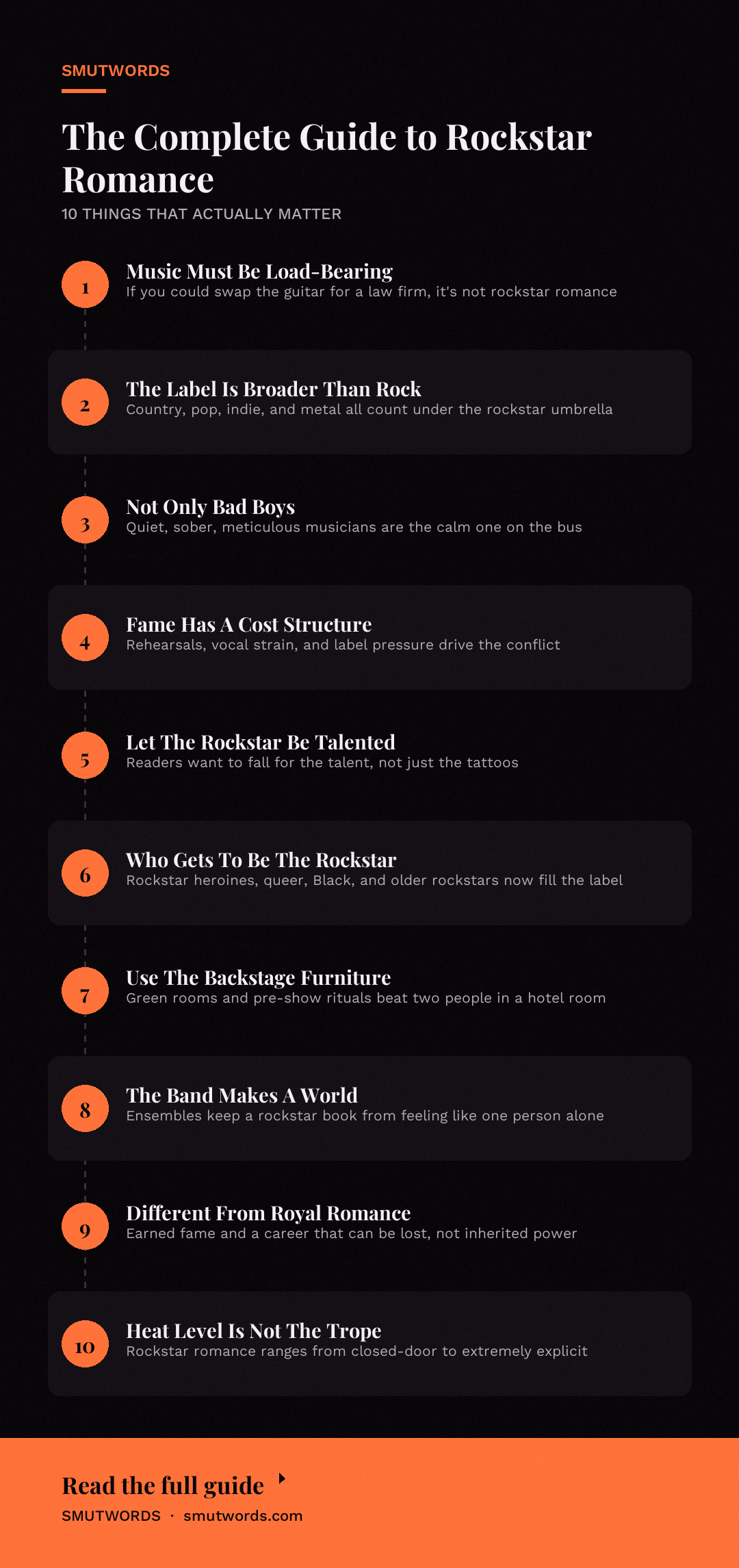
What counts? A story where music-making and its fallout are load-bearing. If you could swap the guitar for a law firm and the plot barely changes, it's a celebrity romance wearing a leather jacket. The real thing uses the tour schedule, the studio sessions, the fan mobs, the label pressure, and the songwriting itself as the engine of the relationship.
What doesn't count? A book where the hero happens to be famous but the fame is window dressing. A sports romance with a musician's backstory. A story where the music is only mentioned twice and both times as a costume detail.
Where the Name Comes From
The "rockstar" label is older than the genre proper, borrowed from the 1960s and 70s when rock musicians became a distinct species of celebrity: wealthy, volatile, photographed, and mythologized. The term bled into everyday speech as shorthand for anyone living a spectacular, ungovernable life. When publishers needed a label for boy-band-and-guitar books in the 1980s and 90s, "rockstar romance" was already waiting for them.
The label is broader than literal rock music today. Country stars, pop idols, indie singer-songwriters, K-pop-adjacent bands, and metal frontmen all fall under the rockstar romance umbrella in reader vocabulary. The genre name won, even as the music inside diversified.
Common Misconceptions
A few ideas that trip readers up when they're new to the trope:
- It's only about bad boys. Plenty of rockstar romances feature quiet, sober, meticulous musicians who are the calm one on the bus. The bad boy version is the loudest, not the only one.
- It has to include cheating or substance abuse. Some do, some don't. A rockstar romance can be entirely wholesome apart from the tour-bus sex.
- The love interest is always a fan. Journalists, bandmates, producers, siblings-of-bandmates, and exes are all common and often richer.
- It's interchangeable with celebrity romance. Celebrity romance is the broader category. Rockstar romance is the subgenre with the guitar, the band, and the specific touring-lifestyle texture.
One more: the rockstar romance is not the same as a "music romance," which sometimes means any book with a musical subplot. The rockstar version keeps the performer at the center of the story, not off to the side of it.
Where Rockstar Romance Comes From
The honest history is a publishing story more than a music-fandom story. Rockstar romances as a commercial category took shape in the 1980s and 1990s, riding the same wave of mass-market paperback expansion that gave readers categories like the early Harlequin lines, historical romance, and the first big wave of contemporary category romance. Music celebrity was the real-world backdrop. The books were the product.
The 1980s and 90s version leaned hard on the bad-boy iconography: leather, drugs, limousines, groupies, a hero who was usually already famous when the book opened. The heroine was often a virginal girl next door or a journalist sent to interview him. The plot was frequently a rescue: she saves him from the lifestyle, and the lifestyle has to be beaten back for the relationship to work.
The 2000s and 2010s rewrote that script. The rise of the mainstream e-book market, the growth of independent publishing, and the enormous reader appetite for long series about bands and brothers and small towns pushed the genre into new shapes.
Reunion tours for aging bands. Rockstar heroines. Stories where the lifestyle is not a threat to be cured but a reality to be negotiated. By the 2020s the trope had absorbed the language of contemporary romance generally: consent-forward sex scenes, mental health arcs, therapy, and a broader range of endings.
The bad boy doesn't have to be rescued now. He can go to therapy, or he can be a woman, or he can be quietly fine and simply lonely. The tropes multiplied and the readership with them.
The clearest shift is who gets to be the rockstar. Early titles treated the musician as a job for the hero. The modern slate includes rockstar heroines, queer rockstars, Black rockstars, older rockstars, and country-flavored takes on the same pattern. The category label stayed put while the people inside it spread out.
How It Shows Up in Erotica
This is where the trope earns its reputation. A rockstar romance gives authors a genuine engine for the sex scenes: the crush, the proximity, the adrenaline after a show, the specific intimacy of a tour bus at two in the morning, the friction between someone used to being wanted and someone who actually wants him.
The strongest scenes usually exploit three things at once. First, the asymmetry: one character has the fame and the other has access to him in a way the world doesn't. Second, the sound. Music is a physical experience and good writers use it.
Third, the time pressure. The tour has a schedule. The interview is booked for one hour.
The label has a publicist watching. Great rockstar romance scenes feel like stolen time, because they are.
What separates a strong version from a flat one is whether the writer uses the rockstar-specific furniture. A weak scene puts two attractive people in a hotel room and calls it backstage. A strong scene uses the green room, the pre-show ritual, the deafening walls of the arena after the encore, the security guard who's been paid to look the other way, the half-written song that becomes a confession.
Common Variations
The rockstar romance has developed a reliable set of sub-modes. Readers search for these by name.
- Rockstar and the girl next door. The original model. She knew him before he was famous, and now she's the only person in the room who isn't impressed. This overlaps heavily with childhood friends to lovers, and the best versions do real work to show why the friendship survived the fame.
- Rockstar and the journalist. High-stakes access, blurred ethical lines, and a very public relationship problem once the story runs. Often plays with the same "I shouldn't be here" tension as a why choose romance, minus the multiple partners.
- Reunion tour romance. The band is back together, everyone's older, and the two exes who wrote the songs that made them famous have to tour together. Slow-burn, often paired with a redemption arc romance for whatever went wrong the first time.
- Fake relationship with a rockstar. Publicity arrangement, tabloid photos, denial that doesn't hold. Frequently includes a blind date romance opening beat or a tabloid-staged first date.
- Rockstar exes. They already had the love story. The book is the second one. Usually a second-chance romance with a lot of history to mine and a lot of sex scenes already earned.
- Bad boy rockstar. Sober-curious, on the edge, needs the right person to see him. Classic; still sells.
- Rockstar and the bandmate. Band-internal romance, often forbidden by contract, family, or the risk to the band itself. Frequently turns a group of bandmates into a genuine ensemble story, which pulls the book toward ensemble romance shapes.
- Rockstar as parent. The secret baby trope has a long, fruitful relationship with rockstar romance. The tour ends, the paternity test lands, and the reunion is loud.
What the Best Books Do Differently
After reading enough of these, a few patterns hold. The books that work treat the music as a real job. There are rehearsals, vocal strain, contract negotiations, a producer who hates the new songs, a venue that cancels. The fame comes with a cost structure, and that cost drives the conflict instead of providing background noise.
The best books also let the rockstar be genuinely good at something. A reader wants to fall for the talent, not just the tattoos. A scene where the hero plays something difficult and the heroine hears it for the first time is worth three pages of backstory and often replaces them.
Enjoyed this? Get a free book.
Join the list and we will send a complete free story straight to your inbox, plus new releases every week after that. No credit card, no catch.
Weak books fall into a few traps. The rockstar is so famous that the story loses all grounding. The conflict could be solved by one honest conversation. The sex scene is placed where the plot should be, so the book becomes a series of interludes with a love story between them.
A strong version, in practice, does four things:
- Puts the reader backstage in a way that feels physically specific: smells, sound levels, tiredness, fluorescent lights.
- Gives the rockstar one genuine vulnerability that isn't a tragic backstory in a leather jacket.
- Uses the band, not just the frontman. Ensembles make a rockstar book feel like a world.
- Lets the sex scenes do emotional work rather than only confirming attraction.
Worth noting separately: rockstar romance has a real overlap with a few adjacent tropes that readers land in when they wander out of it. The protective, dangerous tension of the performer who notices the protagonist too closely shares machinery with stalker romance (readers who love the "he sees only her in the crowd" beat often want the darker version next).
Stories about the love interest being kept close against the situation sometimes slide into captive romance territory, especially on the darker end of indie publishing.
And when the rockstar is returning home, older, divorced, and trying again, the story shades into the same material as divorced and dating.
A quieter pleasure of the trope is the fashion. Good rockstar romance writers dress their characters deliberately, and readers notice. The leather, the boots, the stockings, the backstage-post-show outfit that is somehow both ruined and perfect. Anyone drawn to that level of wardrobe attention is likely to enjoy the nylon fetish guide, which is at least adjacent to the kind of tactile writing this genre rewards.
One more piece of machinery worth flagging: in rockstar romances that involve a memoir, an authorized biography, or a public statement released through a press team, the writer functions as an intimate observer. That specific dynamic has its own page as ghostwriter romance and it's worth reading if the journalist variation is what pulled you here.
Rockstar Romance vs Revenge Romance, Stalker Romance, and Royal Romance
Readers searching for rockstar romance often land on a neighboring trope by mistake, or by curiosity. Three comparisons come up repeatedly, and only one of them is a genuine point of confusion.
The most common mix-up is with prince/princess romance. Both are stories about a famous, high-status partner whose public life is a constant pressure on the relationship. The difference is the source of the status.
Royal romance draws on inherited power, duty, and protocol. Rockstar romance draws on earned fame, talent, and a career that can be lost. The forbidden-love engine is similar. The setting, the lifestyle, and what the couple is actually fighting over are entirely different.
Less real but sometimes confounded: revenge romance. Some rockstar books feature a revenge plot (an old label executive, a rival band, an ex who leaked the songs), but the trope's core is not revenge. If the rockstar's motivation is primarily payback, you're reading a revenge romance with a rockstar in it.
The stalker comparison is real only in the darkest corners. Standard rockstar romance is not stalker romance, even when the hero has a possessive streak. The stalker version puts the obsession at the center of the plot.
Rockstar romance puts the fame at the center. Readers who want one but not the other should check the content notes before buying.
Frequently Asked Questions
What is a rockstar romance?
A rockstar romance is a love story centered on a musician or band, where the fame, touring, and creative life shape the relationship and the plot. The love interest is usually a fan, journalist, bandmate, ex, or someone from the rockstar's past. The trope has been a commercial category in romance publishing for decades and has diversified in recent years to include female rockstars, queer rockstars, and older rockstars.
Is rockstar romance the same as celebrity romance?
Rockstar romance is a subgenre of celebrity romance, which is broader and includes actors, athletes, politicians, and royals. The rockstar version is specifically about musicians, live performance, and the touring lifestyle. If the music is not doing real work in the plot, you're probably reading general celebrity romance with a guitar on the cover.
Do rockstar romances always include cheating or addiction?
No. Some books use those as real plot material, but plenty are essentially wholesome apart from the explicit sex. Readers looking for a rockstar romance without cheating or substance abuse can filter for it, and many authors publish content warnings on their websites or in the front matter of the book.
What are the most popular rockstar romance tropes?
The most common are rockstar and the girl next door, rockstar and the journalist, reunion tour romance, rockstar exes, fake relationship, bad boy rockstar, and rockstar with a secret baby. Bandmate romance is a strong niche with its own loyal readership. Many books combine two or three of these at once.
Why do readers love rockstar romance so much?
For the fantasy of backstage access and the tension between public persona and private vulnerability. The trope offers a specific pleasure: getting close to someone the rest of the world only sees on a stage, and finding out that the private version is even better. The touring lifestyle supplies built-in conflict and time pressure, which keeps the pacing tight.
Are rockstar romances always very explicit?
No. The category ranges from closed-door to extremely explicit. The heat level depends on the author and the imprint, not on the trope itself. Readers looking for intense on-page scenes and readers looking for a mostly emotional story can both find satisfying books within the same label.
Final Thoughts
The rockstar romance is one of the few tropes that promises something specific and then keeps the promise: the crush, the crowd, the encore, and then the quiet moment afterward when the room is empty and the only person still there is the one who matters. Start with a book that takes the music seriously and treats the tour bus as a real place. That's where the best of these stories live.
If you want a next read where the fame is load-bearing and the sex scenes earn their place, look for a title with a rockstar who has an actual career, a band that feels like a band, and a love interest who changes the songs. That's the version worth chasing.




Loading comments…