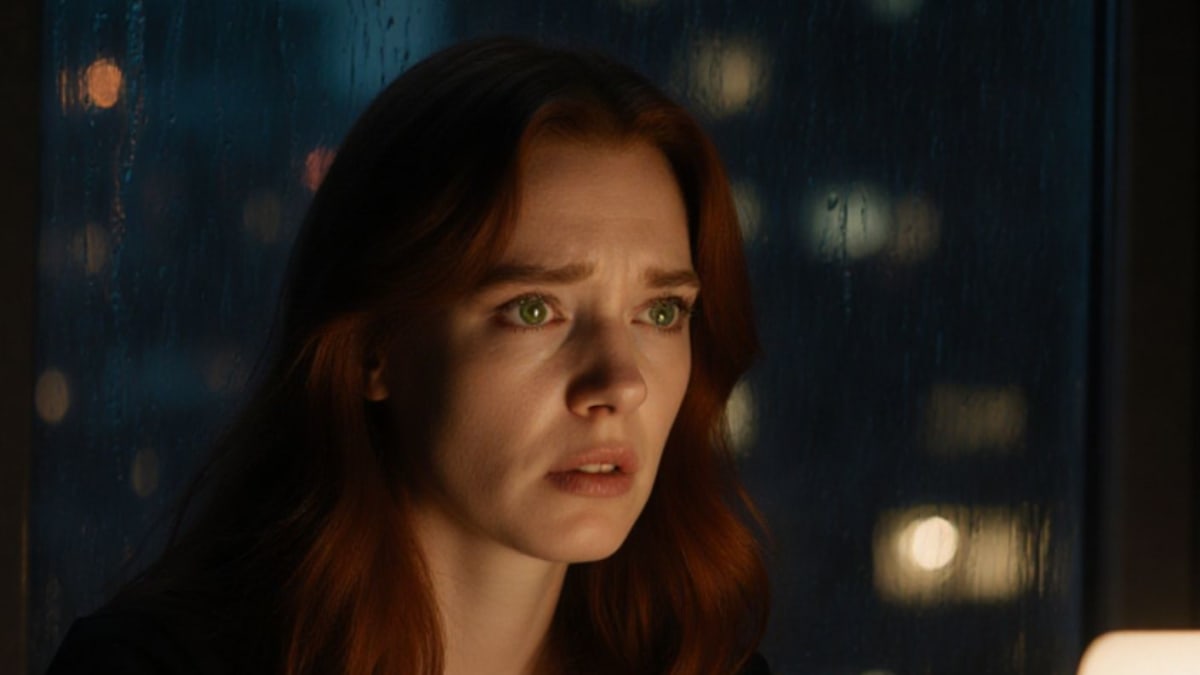
A cabin in the woods romance drops two people into a remote, snowbound or storm-lashed structure and lets the isolation do the heavy lifting. No cell signal. No witnesses. No easy exit.
The couple has to look directly at each other, and at whatever they've been avoiding, because there is nothing else to look at. The cabin is both the safest room in the world and a locked door they can't walk out of, and that contradiction is exactly the engine that makes these books burn.
If you've ever stayed up until 3 a.m. finishing a book where the hero is chopping firewood in the snow while the heroine pretends not to watch from the window, you already understand the appeal on a cellular level. What follows is everything the genre actually does with this setup, why it works, and where it goes wrong.
What Cabin in the Woods Romance Actually Means
The term describes a romance where forced proximity in an isolated rustic setting drives the emotional and physical plot.
A storm strands them. A rental double-books. A plane goes down. A family property needs winterizing.
The specific mechanism matters less than the result: two people, one structure, no audience.
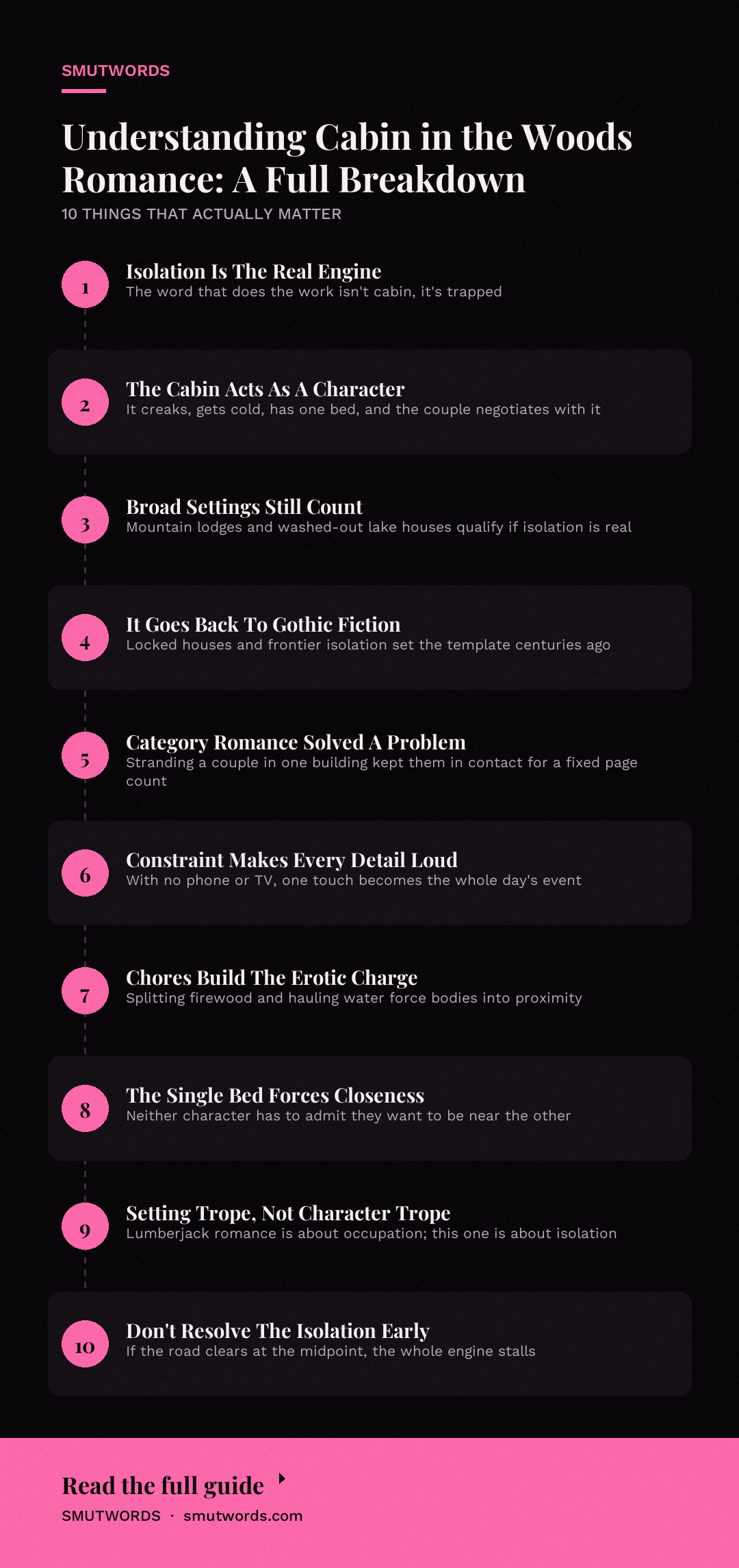
The cabin itself functions as a character in these stories. It has a temperament. It creaks, it gets cold, it has one bed, it has a wood stove that either cooperates or doesn't, and it has a locked cellar or a mysterious previous owner if the book wants a suspense thread. Writers who understand the trope give the building opinions, and the couple spends the whole book negotiating with it.
What counts as cabin in the woods romance is broader than the name suggests. A remote mountain lodge, a hunting cabin, a lake house cut off by a washed-out road, a survival shelter after a crash: all of these qualify as long as the isolation is real and the setting is unsophisticated enough that the characters have to participate in their own comfort. Central heating and a doorman kill the effect.
What doesn't count: a weekend getaway with a working car and a town ten minutes away. The word that does the work isn't cabin, it's trapped. If either character could plausibly order takeout, you've written a vacation, not this trope.
Common misconceptions are worth naming. This isn't only a winter trope, though snow does the isolation work most efficiently because it's visible and relentless. It isn't only a survival thriller, since many of the best examples are quiet and domestic and contain zero external danger. And it isn't automatically a dark romance, though the same setup can be pushed there.
Where Cabin in the Woods Romance Comes From
The isolated-cabin story is older than the romance genre itself. Gothic fiction has been locking people in remote houses for two centuries, and the American frontier and pioneer romance traditions baked isolation into their DNA because that was simply how people lived. The specific modern configuration, though, is a publishing phenomenon that grew alongside the category romance boom of the late twentieth century.
Snowbound and stranded-together plots were a reliable staple of category romance from the 1970s onward because they solved a structural problem elegantly. A category romance needs the couple in constant contact for a fixed page count. Stranding them in one building is the cleanest solution ever invented, and editors knew it.
The trope's modern popularity shifted around two trends. First, the rise of small-town and mountain romance as a commercially dominant subgenre put rugged rural settings in front of millions of readers, and you can trace a direct line from that to the lumberjack romance boom. Second, the indie-publishing era let authors write the trope's darker and steamier versions without a gatekeeper asking them to tone it down.
What changed most over the decades is consent-forward writing and interiority. Older versions often relied on the heroine being trapped by circumstance and rescued by a man. Contemporary versions are just as likely to strand two competent adults who each have their own reasons to be there, and the tension comes from what they want rather than who holds the power to release whom.
How It Shows Up in Erotica
On the page, the trope is a pressure vessel. Erotica thrives on constraint because constraint makes every sensory detail loud. When there's no television and no phone, the heroine notices the sound of the hero's boots on the porch. She notices how long he holds the door.
A single touch becomes an event because the day has nothing else in it.
Strong versions of this trope use the environment as a pacing tool. Firewood needs splitting, which requires the characters to be outside together, breathing hard, in a state of physical exertion. Snow needs shoveling. Water needs hauling.
The cabin keeps generating tasks that put bodies in proximity and require cooperation, and the erotic charge builds out of ordinary work.
The single bed is a cliché for a reason, and skilled authors deploy it in the first act rather than saving it. Getting the couple into one bed early forces the "we're just sleeping" fight, which is one of the most reliable scenes in the genre. The delayed version, where they spend chapters taking turns on the floor, also works if the author commits to the stubbornness of both people.
Common variations you'll see across the catalog:
- Snowbound: a storm seals the road, and the couple has to survive the cold and each other. Highest emotional pressure, cleanest isolation logic.
- Survival crash: one or both characters arrive by accident. Adds injury care, which manufactures physical intimacy fast.
- Enemies stranded: this variant overlaps heavily with hate to love, and the cramped quarters accelerate the flip from hostility to heat.
- Cabin fever: the isolation itself becomes antagonistic. Long days, no escape, tempers fraying. This version runs hotter and more claustrophobic.
- Dark and locked: the cabin belongs to one character, and the other can't leave. This is where the trope crosses into stalker romance territory and the danger is person-shaped.
- Second chance at altitude: two people with history, alone with it, no way to dodge the conversation. This is the closest cousin to marriage in trouble.
- Monster or supernatural occupant: the woods are not empty. See monster breeding romance for the version where the isolation leads to something nonhuman.
What separates a strong version from a flat one comes down to whether the cabin is doing narrative work or just being a backdrop. A flat version could be relocated to a beach house with ten minutes of rewriting. A strong version collapses the moment you try.
Specificity is the other dividing line. Excellent cabin erotica knows what the wood smells like when it's wet. It knows the sequence of heating a room that's been cold for weeks. It knows that snow boots come off clumsily and that hands are clumsy too when they've been frozen.
Enjoyed this? Get a free book.
Join the list and we will send a complete free story straight to your inbox, plus new releases every week after that. No credit card, no catch.
Vague coziness reads as a poster; sensory detail reads as a room you're standing in.
Dialogue density matters as well. The best books in this trope use boredom. Two people trapped together run out of small talk on day two, and that's when the real conversations start.
Writers who skip past that and jump straight to the sex are skipping the reason the sex lands. If you want a useful parallel for how shared private time deepens a couple, our piece on how shared fantasies change intimacy digs into the same mechanism at the level of the bedroom rather than the whole house.
The grumpy/sunshine pairing shows up here constantly, sometimes with the grump being the one who owns the cabin and resents the intrusion. If that's your preferred flavor of contrast, our full breakdown of grumpy/sunshine explains why the dynamic is so durable across settings.
Authors also use the isolation to strip social identity. Nobody in the woods cares what your job is or who your family is. Character work that would normally happen off the page has to happen out loud instead, which is why these books often have more conversation than their premise suggests.
The external plot, when there is one, tends to arrive in the third act: the storm breaks, the rescuer shows up, the reason the hero was hiding out here finally catches him.
A common failure mode is resolving the isolation too early. If the road clears at the midpoint, the engine stalls. The strongest books hold the trap until the emotional work is done, and sometimes the couple chooses to stay after the snow melts, which is the payoff the whole structure was built for.
There's also a version of this trope built on a lie, where one character's reason for being at the cabin isn't what they claim. That's a natural fit for secret identity romance, and a hidden agenda in a cabin with one bed is one of the most effective reveals the genre has.
Worth noting for writers: the trope's publishing history is strange in that many of the most-read examples were produced under work-for-hire arrangements where another author's name went on the cover. If you want the mechanics of that side of the industry, the glossary entry on ghostwriter romance covers it, and it explains why so many series in this space have consistent world-building across wildly different authorial voices.
Cabin in the Woods Romance vs Lumberjack Romance
These two get mixed up constantly because they share a setting and a wardrobe. The confusion is real enough to be worth untangling.
Lumberjack romance is a character trope. The defining feature is the love interest's occupation and its associated physicality: flannel, axes, calloused hands, a working relationship with the forest. The setting usually supports that, but the trope travels. A lumberjack can live in town.
Cabin in the woods romance is a setting and structure trope. The defining feature is isolation and the pressure it produces. The characters can be a tech executive and a wildlife biologist. What matters is that the road is closed and the nearest neighbor is four miles out.
They overlap constantly, and the overlap is one of the most commercially successful combinations in the genre. Just know which one is actually doing the work in your book. If you removed the isolating event and the story still functions, you wrote a lumberjack romance with a nice house.
Frequently Asked Questions
Is cabin in the woods romance always a winter setting?
No, but snow is the most efficient isolation device because it's visually dramatic and physically relentless. Rain, floods, wildfire evacuations, and washed-out mountain roads all work. Summer cabin stories tend to lean harder on emotional isolation to compensate for easier logistics.
What is the difference between cabin in the woods romance and forced proximity?
Forced proximity is the broader trope, covering any situation where two people can't separate: an elevator, a hotel room mixup, a road trip. This trope is a specific and unusually complete version of it, because the setting supplies the proximity and the rustic conditions supply most of the plot.
Does this trope require a danger or survival element?
No. Plenty of the best examples are quiet and entirely domestic, with the only stakes being whether two people can stand being honest with each other. Adding a survival thread raises tension, but it isn't what makes the trope work.
Why is the single bed so important in these stories?
It forces physical closeness without requiring either character to initiate it. Neither person has to admit they want to be near the other, because the cabin made the decision for them. That plausible deniability is what makes the resulting scene so charged.
What makes cabin in the woods romance different from a dark romance?
Consent and agency. In a standard version of this trope, both characters are stuck by circumstance and free to want what they want. When one character controls the isolation deliberately and the other can't leave, the book has crossed into dark romance, and the tone and expectations change accordingly.
Can cabin in the woods romance work as a series?
Yes, and it often does, usually by making the cabin or the surrounding town a shared location across books while each installment follows a different couple. The setting becomes the connective tissue, and readers return for the place as much as the pairing.
Final Thoughts
This trope endures because it removes everything except two people and the question of whether they'll be honest with each other before the weather forces the issue. The cabin is a machine for producing intimacy, and the best authors know which levers to pull and when.
Start with a book that strands its couple hard and refuses to let them off the hook early, and read it on the coldest night you can find. That's the version of this trope that stays with you.






Loading comments…