
Fae romance is the subgenre where at least one love interest is a fairy, elf, or other fey being, usually paired with a mortal human. The plot turns on the danger and pull of the fae realm: bargains, debts, ancient magic, and a lover whose morality runs on rules humans were never taught.
The kiss might bind you for a century. The vow might be a trap you walked into smiling. Fae romance lives on that gamble, and readers keep coming back because no other paranormal subgenre makes desire feel this expensive.
What Fae Romance Actually Means
The term covers a wide shelf. At its core, fae romance requires a fey love interest with genuinely nonhuman rules: they cannot lie but will absolutely mislead, they owe and are owed in ways that outlast human lifetimes, and their courts operate on hierarchies of cruelty and beauty that make a mortal lover a political object as much as a romantic one.
The name comes from "fae," the older spelling of "fey" or "faerie," borrowed from British and Irish folklore where the fair folk were not tiny winged decorators but a parallel aristocracy with its own law. Romance publishing adopted the spelling to signal the darker, sexier, more adult version of fairy stories. When a reader searches "fae romance," they are almost never looking for Tinkerbell. They want the court that would kill you for saying thank you.
What counts: The Cruel Prince-style political fey courts, the ACOTAR shelf, unseelie kings who buy brides, bargains sealed with blood or a firstborn, kidnapped mortals kept as "guests," and fae lovers who are centuries old and flagrantly aware of it.
What doesn't count: a human with pointy ears and no other fey traits, generic elves in a Tolkien-style epic where nobody's clothes come off, or a "fairy" who is a tiny winged helper with no appetite. Those books may be fantasy romance. They are not this.
Three misconceptions come up constantly:
- "Fae romance is just elf romance." It overlaps, but the two shelves differ. For the distinctions, see Elf Romance, which leans toward a different folklore lineage and reader expectation.
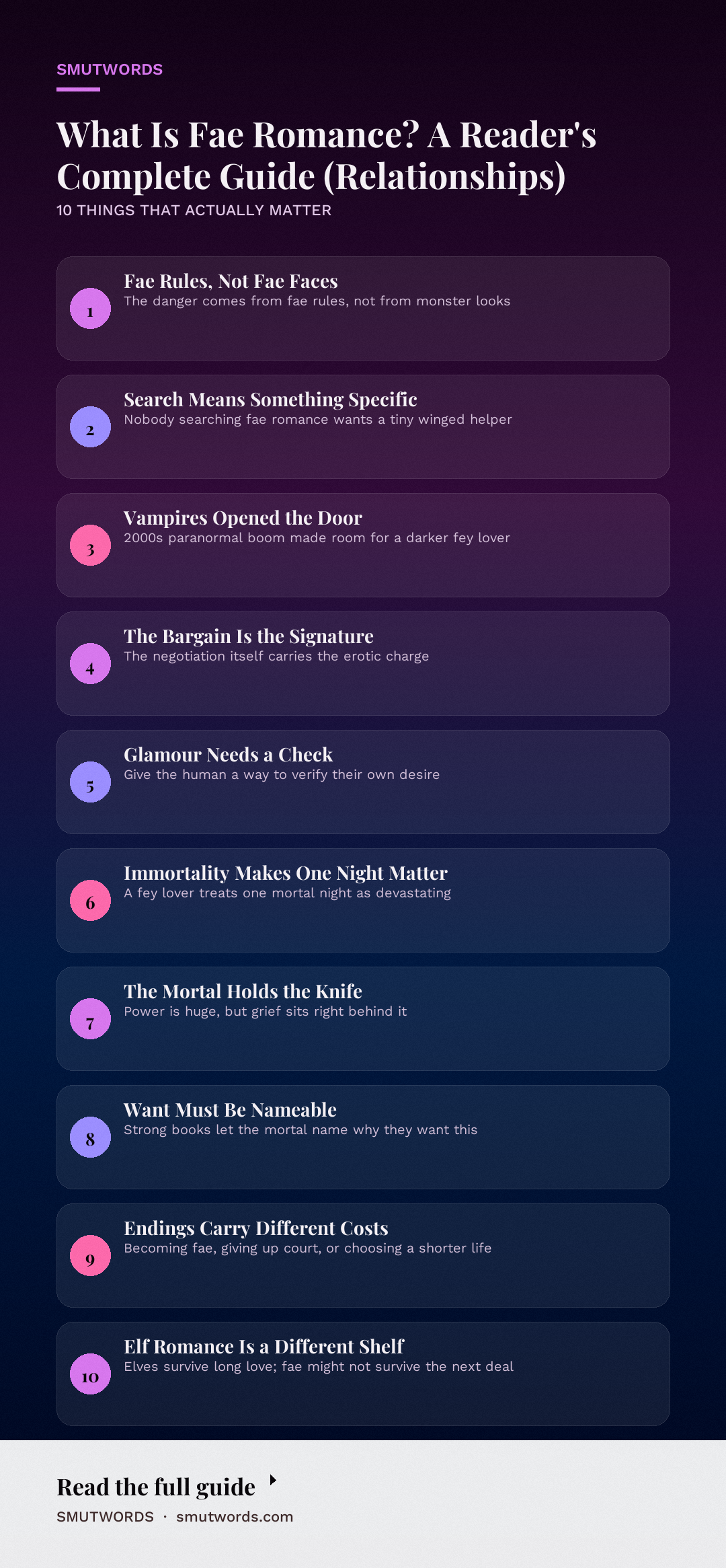
- "The fae love interest is a monster in a mask." Usually not. Fae lovers are frequently beautiful, articulate, and deeply affectionate. The danger comes from their rules, not their faces.
- "The human love interest is a damsel." The best fae romance gives the mortal real leverage: a debt to collect, a name to keep, a bargain they wrote themselves.
Where Fae Romance Comes From
The fair folk have terrified and enticed readers for centuries, but fae romance as a commercial subgenre is a publishing story with a fairly recent timeline. In the 1980s and 1990s, fey characters mostly appeared in epic fantasy as obstacles or allies, and romance novels kept to vampires, werewolves, and historical rakes.
The door opened in the 2000s as paranormal romance exploded. Authors writing about vampires and shifters started borrowing from Celtic and British folklore, and a fey love interest offered something vampires had already used up: a lover who is old, powerful, gorgeous, and bound by an alien moral code. The unseelie court became the new dark castle.
Then came the 2010s YA fantasy boom, which made fairy courts a mainstream setting for romance readers. By the late 2010s and into the 2020s, fae romance had split into its own commercial category: dark fae romantasy for adults, fae captive stories, fae king and mortal bride arrangements, and cozy fae romance for readers who want the magic without the blood price.
Three shifts mark the evolution:
- From adversary to love interest. Early fey characters were villains or quest-givers. Now they carry the sex scenes.
- From background to court. The fae realm used to be a detour. Now it's a setting with its own politics, fashion, and economy of favors.
- From peril to consent. Older fae stories treated a mortal lover as a possession. Modern fae romance spends whole chapters negotiating what the mortal actually wants, and reader demand pushed the genre this way.
The term's history as a genre phenomenon matters as much as its folklore roots. "Fae romance" is a shelf label that readers search, authors tag, and recommendation systems recognize. That commercial identity, not a single origin book, is what made it a category.
How It Shows Up in Erotica
On the page, fae romance does three things that no other dynamic quite manages. It uses bargains as foreplay, glamour as consent trouble, and immortality as a reason for the fey lover to treat one mortal night as devastating.
Bargains as plot and as pressure. A fae deal is a written contract with teeth. Skilled authors make the negotiation a slow grind of tension, where every clause the human agrees to is a small surrender and every clause the fae offers is a hook. The best versions put the erotic charge inside the haggling itself, so by the time they seal it, the reader is already wrecked.
Glamour and the ethics of being wanted. Fae can make a mortal want them. This is where fae romance writers either earn reader trust or lose it.
When a book gives the human character a way to verify their own desire, the trance becomes a story problem, not a cop-out. When it doesn't, the sex scenes feel like they were written around the problem.
The mortal body as a novelty. A fey lover who has lived eight hundred years is astonished by a human: by how fast they change, how briefly they last, how warm they run.
This is the emotional engine of the subgenre. The fae lover's power is enormous. Their grief is right behind it.
Sex between them is often written as a wound and a balm at the same time, with the mortal the one holding the knife.
Common variants authors keep reaching for:
- Dark fae or unseelie. Colder courts, sharper kinks, higher body count. Consent is negotiated under duress and often the hottest scene in the book.
- Fae king or fae lord. Power imbalance as a kink. Expect size difference to be played up, sometimes literally. See Size Difference Romance for how that trope does its work across books.
- Fae captive. The mortal is kept, and the erotic tension is about whether "kept" is a cage or an invitation. Strong versions give the mortal options.
- Chosen human. The mortal has something the fae court needs: bloodline, prophecy, an unpaid debt. The fey lover resents wanting them.
- Fae bargain. The whole book hangs on a contract. Every sex scene is a payment.
- Enemies-to-lovers court romance. Political fey on opposite sides, bedding each other in secret.
What separates a strong fae romance from a flat one often comes down to one choice: does the mortal character want the fey lover for reasons they can name? A weak version leans on glamour as the explanation for desire. A strong version lets the human admit they would want this creature even without the enchantment, which makes the mortal's choice the erotic center of the book.
Enjoyed this? Get a free book.
Join the list and we will send a complete free story straight to your inbox, plus new releases every week after that. No credit card, no catch.
The second marker is whether the fey lover changes. Not in species or morality, but in what they want. A court lord who has never given a straight answer to anyone in six hundred years, and who suddenly tells the truth when it costs him, is doing something a mortal hero could not. The reader can feel the ground move.
A third marker is the cost of the ending. Fae romance almost always ends in some version of "and they stayed together," but the price varies wildly.
Some books let the mortal become fae. Some let the fey lover give up the court. Some end with the mortal choosing a shorter life with the fey lover, and the book treats that as a triumph rather than a tragedy. All three work, and the choice shapes the whole tone.
For readers who want the horror-forward version of nonhuman love, the register shifts here in ways that parallel entirely different shelves. See Cosmic Horror Romance and Angel Romance for two other takes on a love interest who runs on rules humans did not write. For the full breakdown of another inhuman-paramour shelf, see Understanding Incubus Romance Relationships: A Full Breakdown, which shares a lot of DNA with fae romance in how it handles appetite and danger.
Sex Scenes in Fae Romance
The sex itself tends to be written with more ceremony than shifter or vampire sex. Ritual matters. Bindings matter. Blood matters, sometimes literally.
Fae lovers are frequently depicted as ceremonial in bed: particular about names, about vows, about the order of undressing. Authors use that formality to build heat slowly. The power exchange is usually overt.
Fae romance shares territory with Pack Dynamics in how it handles dominance and hierarchy, though the fae version is aristocratic rather than animalistic. Courts, titles, and lineage stand in for the pack.
And the "first time" scenes carry unusual weight. A fey lover who has bedded hundreds of partners over centuries is often written as undone by the mortal specifically. That is a device, and readers know it, and it works anyway.
Fae Romance vs Elf Romance
The two shelves sit next to each other in stores and get confused constantly, so it's worth pulling them apart. Elf Romance tends to draw from a Tolkien-adjacent lineage: long-lived, elegant, nature-tied, morally serious. Fae romance draws from folklore of the fair folk: capricious, court-bound, willing to trade your name for a favor, and not particularly concerned with human ethics.
Practically, that means elf romance often centers on a love that must survive a very long time. Fae romance centers on a love that might not survive the next bargain. Both are good. They hit different nerves.
A third cousin on the shelf is Merman Romance, which shares the "other species with its own laws" structure but usually trades court politics for oceanic danger. Readers who like the alien-morality angle in fae books often find the same pleasure there.
Frequently Asked Questions
What makes a book a fae romance instead of just fantasy romance?
A fey love interest whose nonhuman nature drives the central tension. If the fey character could be swapped for a human duke without changing the plot, it isn't really fae romance. The bargains, glamour, and court rules have to matter to the story.
Is fae romance always dark?
No. There's a whole bright-fae shelf with courts that are whimsical rather than cruel, and cozy fae romance is a growing category. Dark fae is a major slice of the subgenre, but it isn't the entire shelf.
Can the human character end up fae?
Yes, and this is one of the most common endings in the subgenre. The mortal either accepts a transformation, gains a title in the court, or stays human and chooses a shorter life with their fey lover. All three are used constantly.
Do fae romance books always involve a bargain?
Most do, in some form. The bargain is the subgenre's signature device because it turns a relationship into a contract with stakes. Even books without a formal deal usually use debt, favors, or an unpaid obligation as the plot engine.
Are fae romance and fairy tale retellings the same thing?
Not usually. Fairy tale retellings adapt a known story (Cinderella, Beauty and the Beast) with or without fey characters. Fae romance builds its own world and its own politics, often drawing from folklore rather than any single tale.
What kind of sex scenes should I expect?
Ceremonial and high-stakes, often with a power imbalance built into the pairing. Bondage, ritual, blood play, and slow negotiation show up frequently. Some books are explicit, some are closed-door, and the subgenre spans the whole range. For related shelf conventions, the Multiple Mates Dynamic guide covers how another high-stakes relationship structure handles group arrangements.
Final Thoughts
Fae romance rewards readers who like their love interest dangerous in ways no one can see. The best entry point is a book that treats the bargain as the romance, keeps the mortal character sharp, and lets the fey lover slip. If you've never read one, start with a dark fae court story and pay attention to how the author handles the first deal.
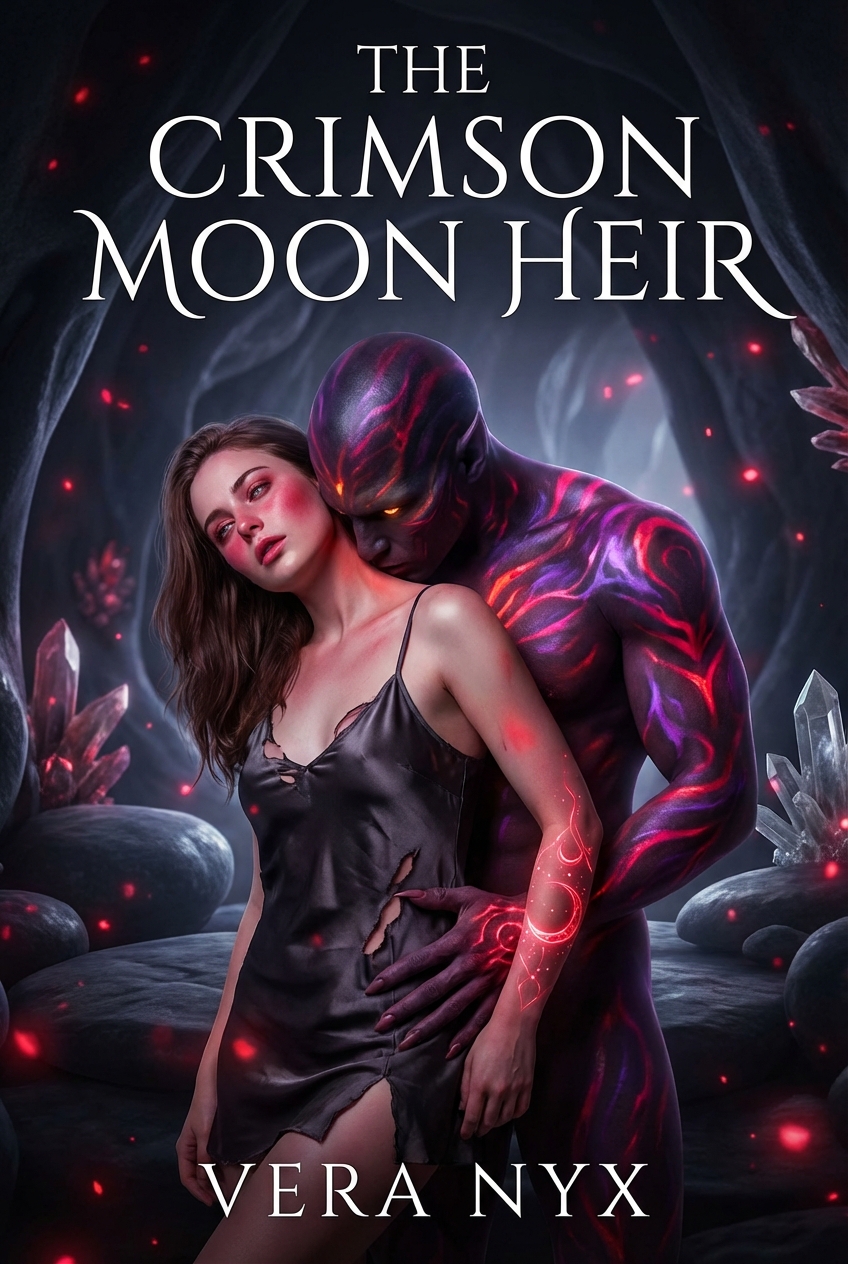
That scene will tell you everything about whether the rest of the book is worth your night. And if you want more inhuman-paramour shelves to work through after, the Vera Nyx interview and Penny London's behind-the-pen-name piece both show how authors building entire otherworldly ecosystems think about the romance at the center.





Loading comments…