Sadism in romance and erotica is the erotic charge that comes from inflicting pain, restraint, or humiliation on a partner who wants it. It's also the charge that comes from the power flowing through the hand that deals it. The term covers everything from a sharp swat in a bedroom scene to a full-length novel built on a sadist's total control and a submissive's willing surrender.
Understanding sadism means understanding that the whip in a good romance is never the point on its own. The point is what the whip says about who holds power, who trusts whom, and how far both people are willing to go together.
What Sadism Actually Means
The word comes from the Marquis de Sade, the eighteenth-century French writer whose novels catalogued cruelty, degradation, and philosophical argument in roughly equal measure. The psychiatric and popular usage that followed turned his name into a clinical noun, but erotica borrowed it back and stripped off most of the pathology. In a romance or erotic novel, a sadist is a character who takes pleasure in causing pain or humiliation to a partner. That pleasure is the engine.
What counts as sadism on the page is broader than most readers assume. It includes physical pain inflicted deliberately, from spanking and flogging to biting and pressure points. It includes restraint used to create helplessness, which is why a shibari scene can carry a strong sadistic charge even when nothing hurts.
Then there's the psychological end. Humiliation, name-calling, denial, making someone beg, and the slow grind of a scene where the submissive knows the sadist is enjoying every second of their discomfort.
What doesn't count is harder to pin down, because the line runs through intent and consent rather than through the act itself. A character who causes pain by accident isn't a sadist in the useful sense of the term. A character who causes pain because they're an abuser isn't a sadist either, at least not in the way erotica uses the word, because there's no negotiation and no mutual pleasure underneath it.
The category depends on both people being inside the same game.
Misconception one: sadism is the same thing as dominance. It isn't. Dominance is about who is in charge. Sadism is about what they enjoy doing with that charge.
You can have a dominant character who has no interest in causing pain, and you can have a sadist who isn't on top, though that combination shows up less often in genre romance.
Misconception two: sadism means the sadist is broken. A lot of published romance leans hard on this idea, giving the sadistic love interest a traumatic backstory that explains his tastes. Plenty of readers find that satisfying. Plenty of others find it tiresome, and a growing share of the genre has moved toward sadists who are simply wired that way, comfortable with it, and entirely capable of being good partners.
The character work is different in each version, and both can be done well.
Misconception three: sadism is always physical. Some of the most effective sadistic characters in the genre never lay a hand on anyone in anger. They use words, rules, orgasm denial, or the simple fact of their attention and its withdrawal.
That style tends to sit closer to psychological edge play than to impact, and it can be just as intense.
Where Sadism Comes From
Sadism has been a recognizable fixture in erotic writing for longer than the modern romance genre has existed as a commercial category. De Sade published in the 1790s. Sacher-Masoch followed a few decades later with work that gave the world the other half of the pairing, masochism, and the two names got fused into sadomasochism by later writers and clinicians.
By the late nineteenth and early twentieth century, erotic literature circulated in plain text and under-the-counter editions where sadistic scenes were a standard feature.
What changed first was the framing. Early erotic writing often used sadism as punishment, corruption, or a sign of villainy. The sadist was frequently a character the heroine should escape rather than one the reader was meant to want. That's the ancestor of the dark romance villain who does terrible things but gets the girl anyway, and the DNA is still visible in a hundred contemporary releases.
What changed second, and much more recently, was consent. The BDSM romance boom of the last thirty years dragged negotiation, safewords, and aftercare onto the page as part of the plot rather than as an afterthought. That shift turned sadism from something done to a character into something a character chooses, negotiates, and owns.
The sadist who asks first and checks in during is a fairly new figure in publishing terms, and he's now the default in most of the subgenre.
What changed third was the rise of the sadistic heroine and the sadistic submissive. For most of the genre's history, sadism lived almost exclusively in male characters. That's no longer true. Female sadists, switch pairings where both partners deal and take pain, and submissives who top from the bottom have all moved from niche curiosity to regular catalog fixture.
The result is a much wider range of power dynamics than the old dominant-male formula allowed.
The genre has also gotten better at distinguishing between a character who is cruel and a character who is sadistic. Cruelty, in the craft sense, is violence without earned intimacy. Sadism, done right, is violence that exists because both people agreed it would. That distinction is the single biggest change in how the trope reads now compared to thirty years ago.
How It Shows Up in Erotica
The craft problem with sadism is the same problem that comes with any power dynamic: the author has to make the reader believe both sides of it. A sadist who only enjoys hurting people is a flat villain. A sadist whose joy is legible, who is visibly getting something he can't get anywhere else from the scene, is a character worth following.
Strong sadism on the page almost always runs on three things at once. First, the sadist's pleasure has to be visible and specific. Not vague menace, but the exact moment when he notices how the submissive's breathing changes and likes it.
Enjoyed this? Get a free book.
Join the list and we will send a complete free story straight to your inbox, plus new releases every week after that. No credit card, no catch.
Second, the submissive's consent has to be structural, not decorative. It has to exist before the scene, hold during it, and matter after.
Third, the pain itself has to be written with enough precision that the reader can feel the shape of it, where it landed, how long it lasted, and what it did to the person receiving it.
When one of those three is missing, the scene goes flat. Without the sadist's pleasure, you have a violence scene. Without the consent, you have something the reader may not trust. Without precision in the pain, the whole thing reads like a summary of an event instead of an event.
Common variations you'll run into in published work:
- Classic impact sadism. Spanking, flogging, caning, paddles. The sadist's toolkit is physical and the scene is built around marks, tolerance, and the moment the submissive stops counting and starts floating.
- Psychological and humiliation-based sadism. Name-calling, forced positions, verbal degradation, being made to say things out loud. The pain is in the head and the sadist knows exactly which buttons are wired.
- Denial and delay sadism. The sadist keeps the submissive on the edge, refuses orgasm, or makes them wait. This overlaps heavily with forced orgasm in the other direction, where the sadist is the one driving the intensity up rather than holding it back.
- Predator and prey. A chase, a hunt, a game of catch. This territory sits close to primal play and feral play, where the sadism is expressed through raw instinct and the thrill of being caught rather than through a formal scene with tools and rules.
- Psychological ownership sadism. Collars, contracts, orgasm control, keyholding. The pain is the ache of being owned and knowing it, and the sadist's pleasure comes from watching the submissive adjust to a life that revolves around their will.
- Sadistic voyeurism. The sadist enjoys watching the submissive suffer under someone else's hand, or enjoys being watched while they deal the pain. This leans on voyeurism and the voyeur husband trope, where the charge comes from exposure and performance as much as from the pain itself.
A strong sadistic scene has a shape. It escalates. It has a beginning where the submissive already knows what's coming and has agreed to it, a middle where the sadist works with increasing intensity and reads the submissive's reactions in real time, and an end that is either a deliberate cooldown or a crash that has to be caught.
Scenes that skip the cooldown are the ones readers complain about in reviews, and they're right to. The come-down is part of the scene.
Aftercare, in good sadism writing, isn't a postscript. It's often the most emotionally loaded part of the chapter. The sadist who held the whip and now holds the submissive in the bath is the whole point of the dynamic for many readers, and the tenderness afterward is what makes the cruelty before it bearable rather than ugly.
If the sadist doesn't stay for the aftermath, the story has told you something about him, and it's usually not flattering.
Two more craft notes worth knowing. First, sadism pairs naturally with jealousy and possessiveness. A sadist who enjoys making the submissive jealous is a different character from one who just enjoys hurting her, and that dynamic gets its own treatment under the jealousy kink umbrella.
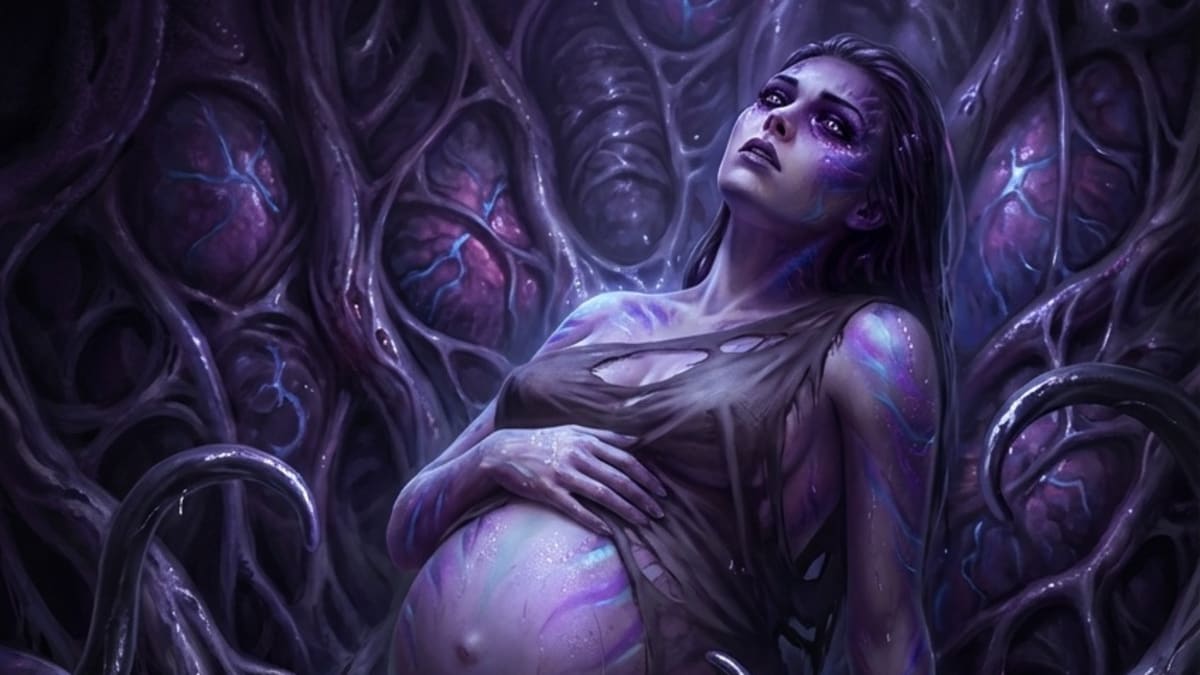
Second, the physical extremity of a sadistic scene can be cranked high in fantasy terms. Some authors pair sadism with exaggerated anatomy and size kink elements, and the appetite for that combination shows up throughout knotting romance and monster romance, where the sadistic love interest is often literally larger and rougher than any human partner could be.
Fantasy sadism has no obligation to be physically realistic. It does have an obligation to be internally consistent, which means the author has to decide early how much the submissive can actually take and then respect that ceiling.
Sadism vs Primal Play
The comparison readers get wrong most often is sadism versus primal play. The two overlap, and plenty of scenes are both at once, but they're not the same thing. Sadism is about the pleasure the top takes in inflicting pain or humiliation. Primal play is about the mode: raw, instinctual, often wordless, often framed as a hunt or a struggle between two animals rather than a formal scene with tools and rules.
The cleanest distinction is in the architecture. A sadistic scene tends to have negotiated structure, specific acts, and a clear before-and-after. A primal scene tends to have a chase, a catch, and an outcome that may not be choreographed much at all, with the intensity coming from the loss of control on both sides rather than from a planned menu of pain.
A writer can run sadism without any primal element, and a writer can run primal play without either partner being a sadist in the useful sense. When both show up in the same book, they usually feed each other, and the result is often the roughest material the author is willing to write.
Frequently Asked Questions
Is sadism in romance the same thing as abuse?
No, and the distinction matters to how the story reads. In erotica, sadism is built on negotiated consent, ongoing communication, and aftercare. Abuse is the absence of those things, and stories that blur the line without acknowledging it tend to read as cynical rather than dark. The best sadism writing is careful about which side of that line its characters are on.
Do I need to know anything about real BDSM to write sadism well?
You need to know enough to keep your characters safe and legible on the page, which mostly means understanding negotiation, safewords, and aftercare. Bondage safety covers the physical basics that overlap with impact scenes. Beyond that, most of what makes sadism work in fiction is character work, not technical accuracy.
What's the difference between a sadist and a dominant?
Dominance is about who's in charge. Sadism is about what they enjoy doing while they're in charge. A dominant can run an entire dynamic without ever causing deliberate pain, and a sadist can exist inside a dynamic where someone else holds the formal authority. In practice, most published sadists are also dominants, but the two traits are separate.
Can a submissive be a sadist?
Yes, and this pairing has become more common in recent years. A submissive sadist tops from the bottom, taking orders while still enjoying the pain they're inflicting, or runs a scene where the power exchange and the sadism don't line up on the same axis. Writing it well usually means making the mismatch part of the tension rather than pretending it isn't there.
What does aftercare look like in a sadism scene?
It varies, but the essentials are physical care, emotional check-in, and time. Water, food, warmth, wound care if needed, and a partner who stays present long enough for the submissive to come back to themselves. In fiction, aftercare is often where the sadist's actual feelings for the submissive become visible, which is part of why it's the scene readers remember.
Is sadism always sexual?
No. In real life and in fiction, sadistic pleasure can be non-sexual and still intense, which is why some scenes read as psychological rather than erotic even inside a romance. In published erotica, the two usually bleed into each other, but the scene's charge can survive on power and intensity alone without any genital contact.
Final Thoughts
Sadism in erotica works when both people in the scene are getting exactly what they came for and the author is honest about what that costs each of them. The scene is a negotiation dressed up as a punishment, and the tenderness afterward is what proves the punishment was a gift.
If you want to see the shape done well, read a book where the sadist checks in before he starts. That small beat tells you more about whether the writer understands the dynamic than the whip does.






Loading comments…